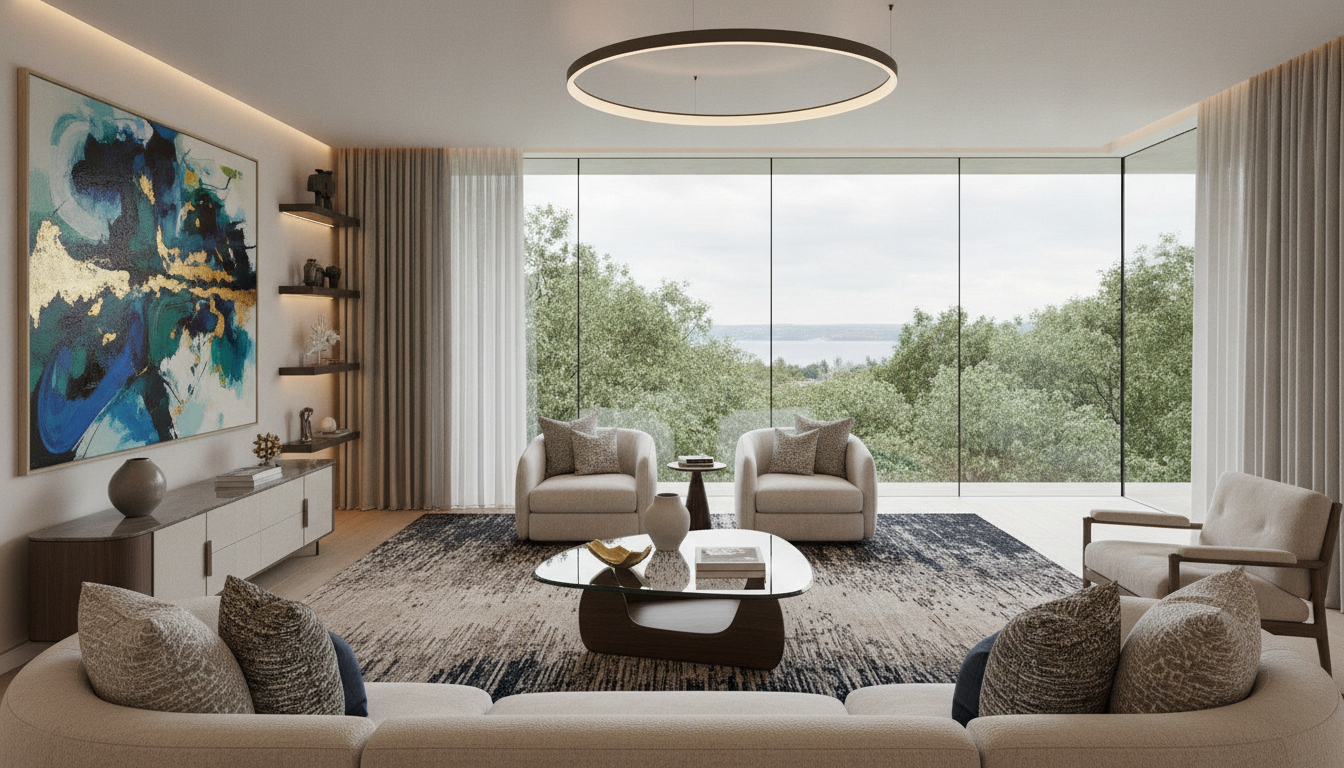
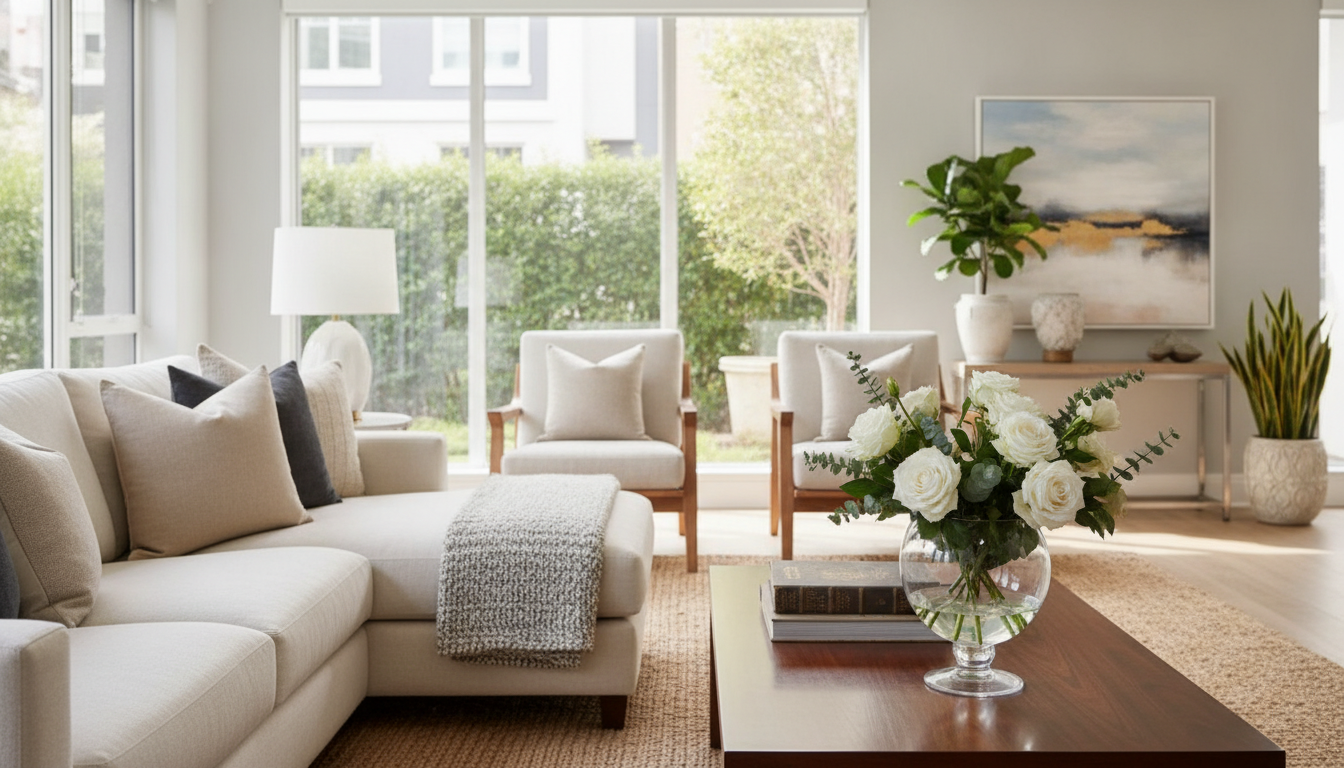
Did you know most people spend almost 90% of their time indoors? Yet, they rarely think about the biggest canvas in their home. Homeowners often ignore the ceiling, focusing only on walls and floors.
A well-designed false ceiling can change the feel of any room. It can add character, depth, and even hidden features to your home.
Improving your interior design starts with thinking about your ceiling. Whether you want to hide wires or make a statement, the right choice matters a lot. We’ll show you how to pick the best style for your space.
Key Takeaways
- Ceilings are a huge, often ignored chance to improve your home.
- Smart ceiling planning adds beauty and function to your space.
- Modern designs can hide wires and HVAC systems well.
- Choosing the right design depends on your room’s size and lighting needs.
- Looking up can completely change the mood of your home.
What is a False Ceiling?
We often look for ways to make our home interiors better. A modern false ceiling is a great choice. It’s a secondary ceiling layer that hangs below the main ceiling of a room.
This feature gives a finished look and a clean, polished appearance. It can change the mood of a room with a unique false ceiling design.
Benefits of Installing a False Ceiling
The main benefit is hiding unsightly elements. We can hide wiring, ducts, and pipes behind the panels. This keeps the space clutter-free.
These ceilings also improve the look of a room. They let us add recessed lighting, making the home warm and inviting.
Common Materials Used for False Ceilings
Choosing the right false ceiling materials is key for the look and durability. We have many options for different budgets and styles.
- Gypsum and POP: These are popular for their smooth finish and versatility in molding.
- Wood: Ideal for adding a touch of warmth and luxury to a room.
- Metal and Glass: Perfect for contemporary or industrial-style interiors.
- PVC: A cost-effective and moisture-resistant choice for kitchens or bathrooms.
Differences Between False Ceilings and Traditional Ceilings
It’s important to know the difference between a suspended ceiling design and a traditional plaster or concrete ceiling. A traditional ceiling is a permanent part of the building. A false ceiling is not.
Traditional ceilings are often fixed by the existing height and finish. But, a suspended system lets us lower the ceiling or create complex patterns. This can define different zones in a room.
Popular Styles in False Ceiling Design
Homeowners are now focusing on making their overhead spaces unique. Modern interior design is moving towards adding depth and personality to rooms. The right false ceiling design can completely change your home’s feel.
Modern Minimalist Designs
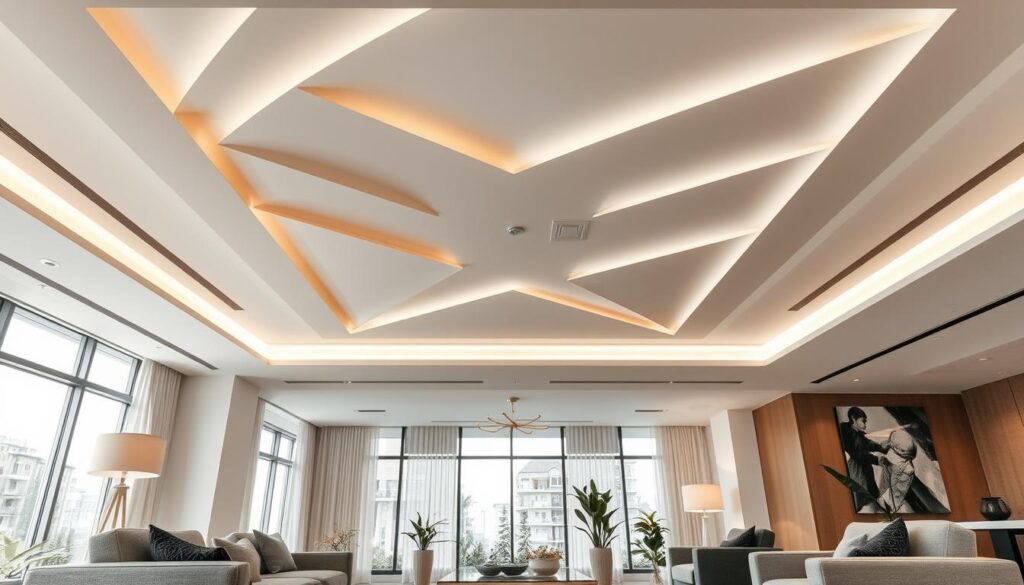
Minimalism is still popular for its clean look and calm feel. A modern false ceiling in this style often uses geometric shapes. These shapes help define areas without making the room feel cluttered.
Such designs are great for small homes. They make the space feel bigger by creating an illusion of openness.
- Focus on monochromatic color palettes.
- Use recessed lighting to maintain a flush surface.
- Incorporate sharp, linear edges for a sophisticated look.
Artistic and Decorative Options
Artistic ceilings can be a room’s focal point. We suggest using unique textures or patterns to draw the eye up. This turns the ceiling into a focal point that anchors the room’s look.
“Design is not just what it looks like and feels like. Design is how it works.”
Creative interior design lets you try out different materials. You can use wood, metal, or fabric panels. These add warmth and character, making your space feel special.
Architectural Inspirations
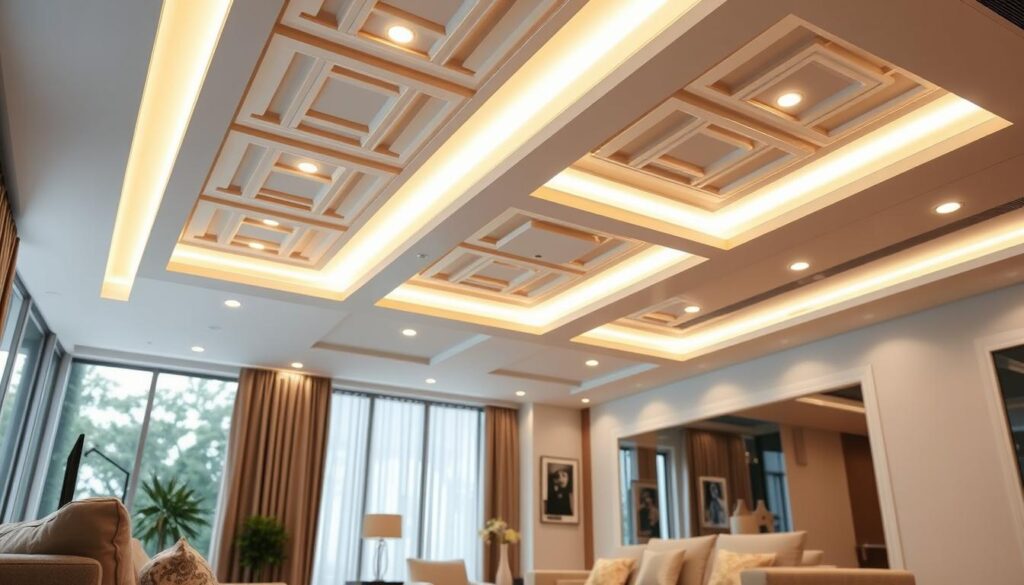
Architectural styles bring a structural depth that changes your living space. By using different heights and layered tiers, you can create a unique environment. This type of false ceiling design adds a touch of professionalism to any project.
Whether you like a coffered look or a floating island, these choices add value. A modern false ceiling with architectural flair makes your interior design timeless and functional for years.
Choosing the Right False Ceiling for Each Room
Transforming your home starts with choosing a ceiling style that balances beauty with practical needs. The optimal height for any space is between 8.5 and 9 feet from the floor. This height makes rooms feel open, airy, and comfortable, not cramped.
Selecting the right false ceiling design depends on the room’s function and atmosphere. Tailoring your choices to each room’s purpose can greatly improve your interior design.
Living Room Ideas
The living room is the heart of the home. It’s perfect for a modern false ceiling that draws attention. Consider layered designs or recessed lighting for depth and luxury. These designs help define seating areas and add sophistication to your guest space.
Kitchen Aesthetic Enhancements
In the kitchen, utility and style must match. Choose materials that are easy to clean and resistant to grease or heat. A sleek, minimalist look is best here to keep the space organized and bright, essential for food preparation.
Bedroom Comfort Designs
Your bedroom should be a peaceful sanctuary. A gypsum ceiling design is great for this space because it offers a smooth, clean finish. Customize it with soft, ambient lighting. Subtle curves or cove lighting can create a calming atmosphere for better sleep.
Bathroom Climate Control
Bathrooms need materials that can handle high humidity. It’s crucial to choose moisture-resistant boards to prevent mold and ensure durability. Focus on functional, water-resistant options to keep your bathroom beautiful and healthy.
Lighting Solutions with False Ceilings
When we plan a false ceiling design, the lighting scheme is key. It connects the structure with comfort. The right fixtures can highlight textures and set the mood.
Ambient Lighting Techniques
Ambient lighting is the base of your home’s light. It creates a soft glow, making rooms feel bigger and more welcoming. Cove lighting adds depth and warmth to modern spaces.
LED strips hidden in the ceiling give a diffused light. This method avoids harsh shadows and looks clean and sophisticated. It’s great for enhancing false ceiling lighting without being too much.
Task Lighting Integration
Task lighting is for areas you use every day. We use recessed spotlights or downlights in the ceiling. These lights focus on specific areas, like kitchen islands or reading nooks.
Placing lights strategically is key. Grouping them in zones makes the room more functional. This keeps your space bright while keeping the ceiling looking good.
Decorative Light Fixtures
Decorative lights are the finishing touch. They can be modern chandeliers or simple pendant lights. These lights draw the eye up and add personality to your home.
Choosing the right fixture depends on your ceiling height and furniture style. We suggest matching bold designs with your ceiling to create a cohesive look. Here’s how different lighting types enhance your space.
| Lighting Type | Primary Purpose | Best Application |
|---|---|---|
| Cove Lighting | Ambient Glow | Living Rooms |
| Recessed Spots | Task Focus | Kitchens |
| Pendant Lights | Decorative Appeal | Dining Areas |
| Track Lighting | Adjustable Beam | Home Offices |
Color Trends for False Ceilings
Your ceiling color can change how a room feels. It can make a room look bigger or more cozy. Choosing the right color can make your space feel just right for you.
Neutral Shades and Their Versatility
Neutral colors are popular for their timeless look and flexibility. Soft white, warm beige, or light gray are great. They let your furniture and decor shine.
These colors are perfect for small rooms. They make the room feel bigger and brighter. Plus, they’re easy to update without repainting.
Bold Colors to Make a Statement
Want to stand out? Try bold or deep colors. Dark colors like navy blue or charcoal can make a room feel cozy. They also make high ceilings look amazing.
- Deep blues bring calm and class.
- Rich terracottas add warmth and a natural feel.
- Metallic finishes add luxury and modern style.
Using Patterns and Textures
Adding patterns or textures can make your space more interesting. Geometric panels or wood grain finishes add depth. They work well with the right false ceiling lighting.
Think about how light and shadow play with these textures. A well-designed false ceiling and false ceiling lighting make your home feel special and finished.
How to Measure for Your False Ceiling
We believe that successful home improvement projects start with a good measurement plan. Getting precise dimensions is key to a seamless false ceiling design fit. Without these exact numbers, you might face material waste and installation issues.
Tools Needed for Accurate Measurement
To get professional results, you need the right tools. A high-quality steel tape measure is crucial for room length and width. A laser level is also important to keep your suspended ceiling design level.
Have a notepad and pencil ready to write down measurements right away. A digital stud finder helps find wall supports. These tools make your work easier and more accurate.
| Tool Name | Primary Function | Accuracy Level |
|---|---|---|
| Steel Tape Measure | Measuring room dimensions | High |
| Laser Level | Ensuring horizontal alignment | Very High |
| Stud Finder | Locating wall supports | Moderate |
Tips for Planning Your Layout
Think about where light fixtures and air vents are when planning. A good gypsum ceiling design considers these to avoid gaps or shadows. Sketch your room on graph paper to plan the grid system.
Remember the thickness of your materials. Regular dusting keeps your ceiling easy to clean. Planning for easy access ensures your ceiling stays clean for years.
Common Mistakes to Avoid
Don’t forget to measure uneven walls or corners. Measuring at different points helps spot irregularities. Ignoring these can make your suspended ceiling design look off.
Another mistake is not calculating enough material. Add at least ten percent to your total to account for cuts or mistakes. Also, make sure your gypsum ceiling design doesn’t block important panels or fire safety equipment.
Professional vs. DIY Installation
Starting a home renovation means deciding between professional help or doing it yourself. The type of false ceiling installation you choose will guide your decision.
When to Hire a Professional
For complex tasks like electrical wiring or major structural changes, a licensed contractor is best. They make sure your gypsum ceiling design follows local building codes and safety rules.
Working with high ceilings or complex lighting? An expert can avoid expensive errors. They have the right tools to handle heavy materials safely and quickly.
Benefits of DIY Installation
DIY fans might enjoy tackling the project themselves. It can save you money on labor and help you understand your home better.
DIY lets you work at your own speed and make changes as needed. It’s ideal for simpler false ceiling design projects that don’t need advanced engineering.
Essential Tools for DIY Enthusiasts
For a DIY false ceiling installation, having the right tools is key. Here are some must-haves to start:
- Laser level for perfect room alignment.
- Drywall saw for precise panel cuts.
- Power drill with various bits for secure mounting.
- Measuring tape and a chalk line for planning.
- Safety goggles and gloves for protection.
Maintenance Tips for False Ceilings
A beautiful ceiling is an investment that deserves regular attention. By following a simple care routine, your false ceiling design will stay stunning for decades.
Cleaning Methods and Best Practices
Keeping your panels clean is easier than you think. For surfaces with lustre paint, a soft, damp cloth can remove dust and light grime.
Avoid harsh chemical cleaners or abrasive sponges, as they can damage the finish. For textured panels, a gentle vacuum with a soft brush can lift debris without scratching.
Signs Your False Ceiling Needs Repair
Stay vigilant for early warning signs that your ceiling needs professional help. Visible sagging or bowing in the center of a panel means the support structure may be compromised.
Look for water stains or discoloration, which often indicate hidden leaks above the panels. If you notice cracks near the joints, address them quickly to prevent further issues.
Tips for Long-Lasting Durability
With proper care, a modern false ceiling installation can last up to 20 years. Schedule a professional inspection every few years to ensure all fasteners and suspension systems are secure.
Maintaining a stable indoor climate prevents warping or material fatigue over time. By staying proactive, you protect your investment and keep your living space looking fresh and modern for years.
Budgeting for Your False Ceiling Project
Starting a home improvement project needs a solid financial plan. Knowing your costs upfront helps avoid surprises and makes your dream a reality.
Cost Breakdown of Materials and Labor
The cost of a false ceiling changes based on design and materials. Prices can shift with the market, so get quotes from several contractors.
Here’s what your budget should cover:
- Material costs: Prices for gypsum, POP, or metal panels differ a lot.
- Labor charges: Good installation is key for a quality finish.
- Finishing touches: Paint, textures, and trims add to the total cost.
Energy Efficiency Considerations
A smart false ceiling design can save you money on bills. Good insulation keeps your home’s temperature steady, saving on heating and cooling.
Adding energy-saving LED lights to your ceiling also cuts down on electricity use. These upgrades might cost more upfront but save you money in the long run.
Tips to Stay Within Budget
Staying within your false ceiling cost means careful planning. Focus on what you really need to avoid overspending.
Here are some tips to keep your project affordable:
- Save 10% for unexpected costs.
- Opt for standard, durable materials at lower prices.
- Focus on key areas first if your budget is tight.
By planning well, you can create a beautiful, functional space that meets your budget. Preparation is the secret to a smooth renovation.
Innovative Technologies in False Ceiling Design
We’re moving towards smarter, greener ceiling systems in modern homes. Today’s homeowners want more than looks from their ceilings. Advanced systems can make any room more functional and connected.
Smart Ceiling Solutions
The connected home trend has led to smart ceiling solutions. Now, we can have ceilings that adjust lighting based on time or mood. These systems work with voice assistants, making home control easy.
These setups also include sensors for climate control. This modern false ceiling approach keeps your home comfy while saving energy. It hides complex wiring, keeping your space looking sleek and high-tech.
Acoustic Considerations for Soundproofing
Good false ceiling design means controlling noise. We use special acoustic panels to cut down echoes and outside sounds. This is key for quiet spaces like home offices or media rooms.
Choosing the right materials for these panels can make a room quiet in a busy home. These enhancements work quietly to improve your life. Proper installation keeps your space calm, even with noise nearby.
Eco-Friendly Materials
Sustainability is key in false ceiling materials today. We’re using recycled fibers, bamboo, and low-VOC paints to reduce our impact. These choices let us achieve a stylish look while caring for the planet.
These materials are not only green but also last long and are easy to keep up. They’re perfect for creative false ceiling design and hiding electrical wiring. The table below shows how these options compare in performance and eco-friendliness.
| Technology Type | Primary Benefit | Sustainability Level | Maintenance Needs |
|---|---|---|---|
| Smart LED Integration | Energy Efficiency | High | Low |
| Acoustic Fiber Panels | Noise Reduction | Medium | Low |
| Recycled Composite | Eco-Friendly | High | Minimal |
| Automated Sensors | Climate Control | Medium | Moderate |
Real-Life Examples of False Ceiling Designs
Looking at successful projects makes home renovation easier. Seeing room transformations shows how a false ceiling can change a space.
Case Studies of Transformative Designs
A simple ceiling upgrade can change a room’s feel. Looking at interior design projects shows how lighting and structure improve a room. Even small changes can greatly affect your daily life.
Before-and-After Visuals
Seeing a plain surface turn into a masterpiece helps your renovation planning. Compare these visuals to get ideas for your home. Good pictures help you choose styles that fit your taste and needs.
Customer Testimonials and Experiences
Working with reliable partners makes renovation smooth. Companies like Livspace offer a 45-day move-in guarantee and 146 quality checks. Hearing about these positive experiences can motivate you to start your renovation today.