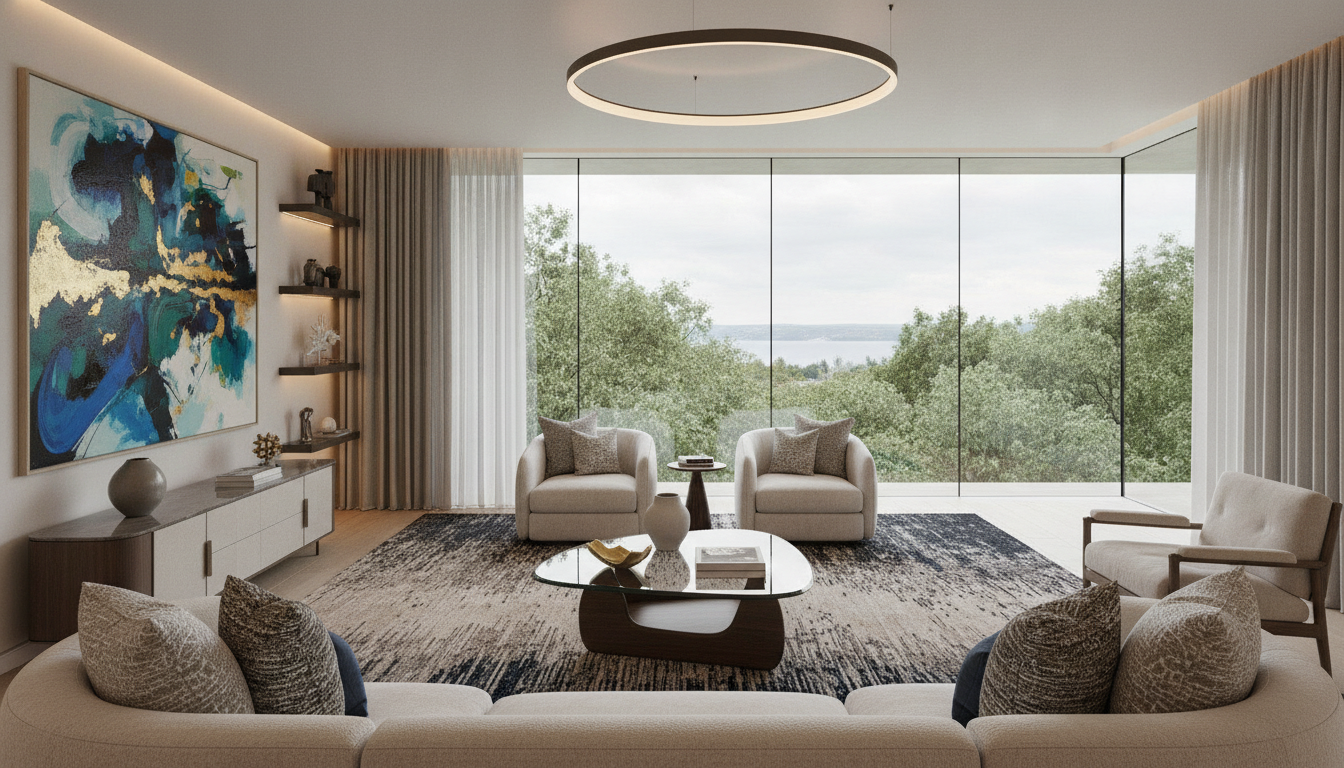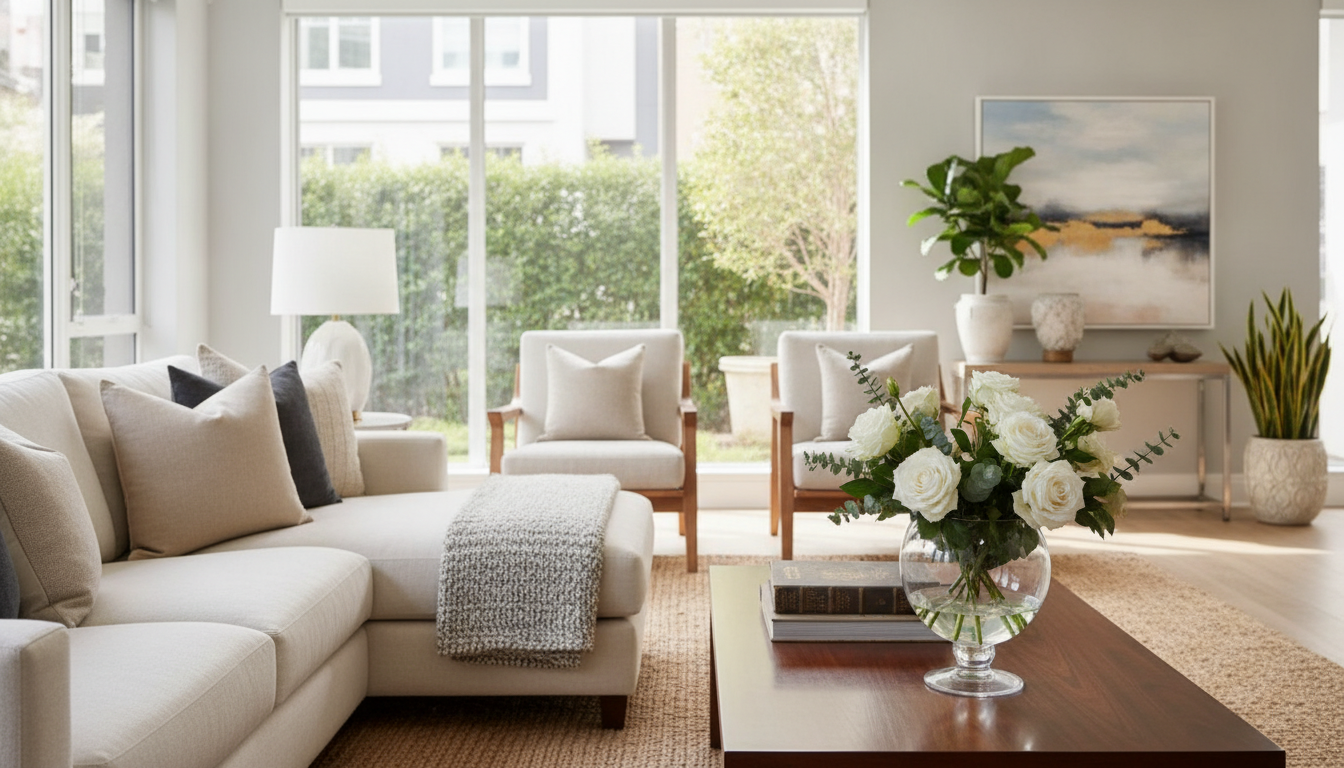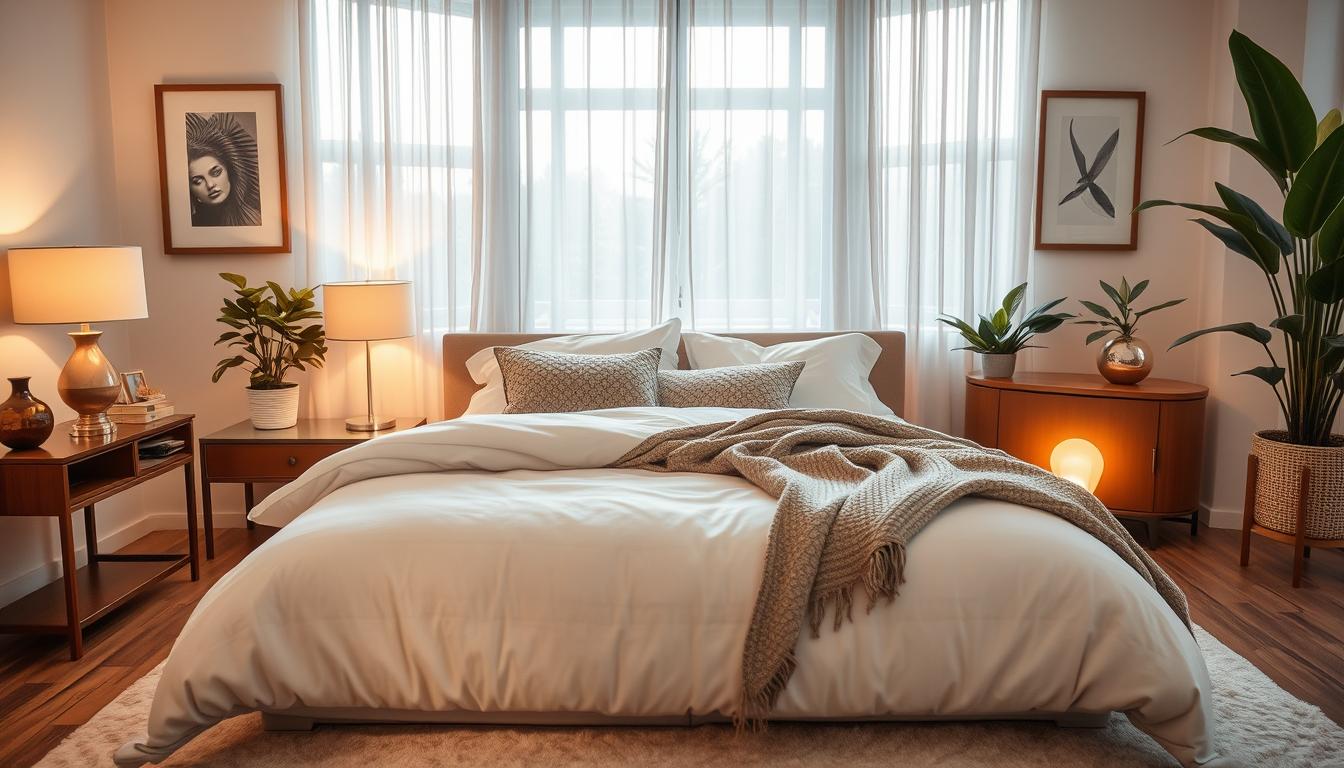
Did you know we spend about one-third of our lives asleep? Since we spend so much time in this room, it should be more than just a place to sleep.
We think your bedroom should be a personal sanctuary for deep relaxation. With expert bedroom interior design, we can make any room a peaceful haven that meets your needs.
To create this space, we need careful planning and a clear vision. Whether you want modern simplicity or cozy textures, exploring new bedroom decor ideas helps us make a space that shows off your personality and lifestyle.
Key Takeaways
- Prioritize comfort to turn your sleeping area into a true sanctuary.
- Professional planning helps maximize the functionality of your private space.
- Reflect your personal style through intentional aesthetic choices.
- Small updates can significantly improve your overall sleep quality.
- A well-planned room serves as a peaceful retreat from daily stress.
Understanding Your Bedroom’s Purpose
A successful bedroom interior design begins with knowing how you’ll use your space. It’s not just for sleeping. Many of us also read, work, or relax here. By understanding these needs, we can design a space that supports our lifestyle.
Importance of Functionality
Functionality is crucial for a well-planned room. We need to make sure each piece of furniture has a purpose. Efficiency is important; if furniture doesn’t help, it can just clutter the room.
Good flow and easy access make a room feel bigger and more organized. A modern bedroom design uses clean lines and smart placement. This makes our daily routines easier. By removing clutter, the room can breathe and function better.
Balancing Comfort and Style
Finding the right mix of function and style is key for a cozy space. We might want to follow trends, but comfort comes from personal touches. A room that looks good but feels cold isn’t relaxing.
Choosing quality textiles and soft lighting helps merge modern bedroom design with comfort. When we mix these, we get a harmonious space that’s welcoming yet stylish. Your bedroom interior design should show your personality and still be a functional retreat.
Choosing the Right Color Palette
We think color is a silent language in interior design. The colors you pick for walls, bedding, and accents set the mood of your space. By picking the right bedroom color schemes, you can turn a simple room into a cozy retreat.
Neighborhoods of Color: Warm vs. Cool
Colors are either warm or cool. Warm colors like soft terracottas, buttery yellows, and gentle blushes add intimacy and energy. They make big rooms feel cozy and welcoming.
Cool colors like sage green, sky blue, and crisp gray bring calm and relaxation. They help slow down your heart rate, perfect for unwinding at night. Picking the right color temperature is key to your personal style.
Creating Mood with Color Schemes
To achieve balance, use the 60-30-10 rule. This rule suggests 60% of the room for a dominant neutral, 30% for a secondary color, and 10% for an accent shade.
This rule works well for a minimalist bedroom design. It keeps the space clean and interesting. By limiting colors, your room stays a place of rest, not distraction. Think about how these colors affect your mood every day.
| Color Category | Primary Effect | Best For |
|---|---|---|
| Warm Neutrals | Cozy and Inviting | Large, airy bedrooms |
| Cool Blues/Greens | Calm and Serene | Improving sleep quality |
| Monochromatic | Sophisticated and Clean | Minimalist bedroom design |
| Bold Accents | Energetic and Modern | Personal expression |
Your bedroom should show your personality and support your sleep. Whether you like monochromatic tones or bold colors, be consistent. This creates a peaceful and cohesive space.
Selecting Furniture That Fits Your Space
Finding the right furniture is key to a cozy bedroom. A well-chosen bedroom furniture layout makes your room feel open and welcoming. It also makes it easy to move around.
When you pick furniture that works well and looks good together, you create a peaceful space. This space supports your daily life.
Importance of Scale and Proportion
Choosing furniture that’s too big or too small is a common mistake. Scale is about the size of an item compared to the room. Proportion is how different items fit together.
Big dressers can make a small room feel cramped. Tiny nightstands next to a big bed look odd. If you need help, our expert design services can guide you to the right fit.
Multi-functional Furniture Ideas
Using space wisely is crucial, even in small homes. Choose furniture that does more than one thing. This keeps your bedroom furniture layout tidy and organized.
An ottoman with storage is great for extra blankets or pillows. Wall-mounted desks save floor space for those who work from home. Platform beds with drawers underneath keep things simple and within reach.
Tips for Choosing a Bed Frame
Your bed is the room’s focal point. Picking the right frame is important. Think about the headboard’s height and how it fits with your walls and ceiling.
A tall headboard adds luxury, while a low frame makes the room feel modern. Make sure the frame fits your mattress perfectly. Choose materials that match your home’s style. This way, your bedroom furniture layout stays both useful and stylish over time.
Lighting: The Unsung Hero of Design
Lighting is the quiet designer of your bedroom, shaping your daily experience. It changes from a lively morning to a cozy, intimate retreat at night. By planning your lighting, your room adapts to your needs.
Using Natural Light to Enhance Space
Start by letting sunlight into your room for an airy feel. Use sheer curtains or blinds to soften the light and keep privacy. These changes let you enjoy the outdoors’ beauty without losing comfort.
Placing mirrors opposite windows also boosts natural light. This trick makes small rooms feel bigger and inviting.
Layering Different Light Sources
A good bedroom uses various lights for both function and mood. Begin with a central light for general use, perfect for cleaning. This light is your main source for daily tasks.
Then, add task lights like bedside lamps or sconces for reading or relaxing. These lights are key for late-night activities. Keeping them separate lets you control the room’s mood.
Lastly, add accent lights to highlight special features or art. Warm bulbs create a relaxing sanctuary. Layering these lights turns your bedroom into a personalized, functional space.
Decorative Elements That Elevate Design
Decorative elements can transform a room into a cozy retreat. By choosing items that match your style, you can add unique bedroom decor ideas that show who you are. These touches make a room more than just a space; they turn it into a sanctuary.
Wall Art: How to Choose and Hang
Choosing the right wall art is key to setting the mood of your room. Opt for pieces that bring calm or inspire, like abstract prints or landscapes. When hanging, keep it consistent for a balanced look.
Creating a gallery wall is a great bedroom decor idea for adding interest. Lay out your frames on the floor to try different layouts. Make sure the center of your display is at eye level for the best view.
Adding Textures with Fabrics and Materials
Adding depth to a room is crucial. Mix different fabrics to create a tactile experience. Combine a chunky throw with smooth pillows or a velvet bench.
Bring in organic materials to ground the space. Use natural wood, woven baskets, or a jute rug for an earthy, sophisticated feel. These textures make the room cozy and inviting.
Personal Touches: Photos and Mementos
Your bedroom should reflect your story. Adding personal photos and mementos is a great bedroom decor idea to make it feel like home. Displaying travel items or family photos adds warmth that mass-produced art can’t.
Group small items on a shelf or tray to stay organized. Curating these pieces keeps your bedroom decor ideas meaningful without clutter. It’s about celebrating your memories in a peaceful space.
Floor Plan and Layout: Maximizing Space
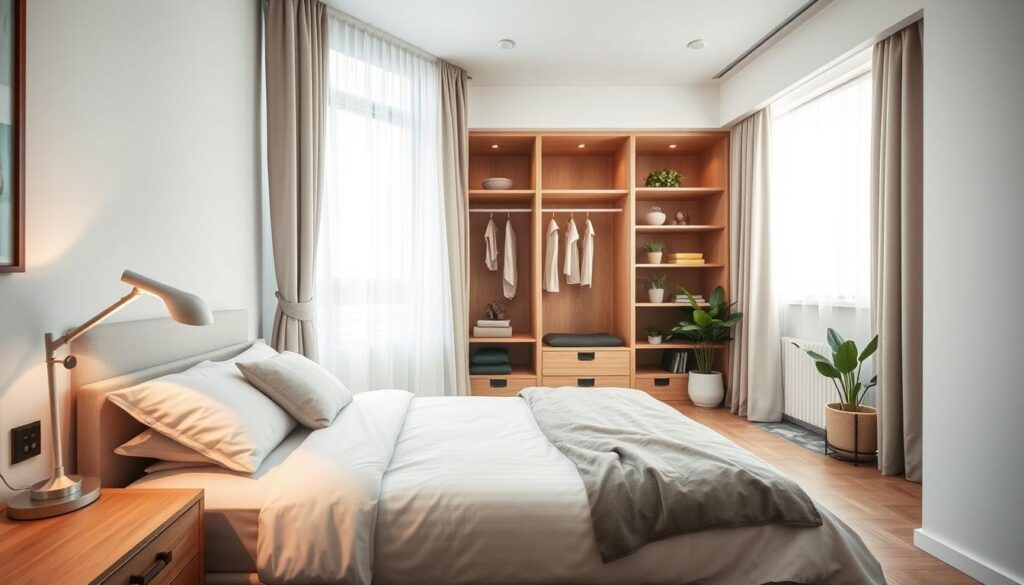
Mastering space planning is key to making any bedroom a cozy retreat. Whether it’s a big master suite or a small guest room, how you arrange things matters a lot. A well-thought-out bedroom furniture layout makes your space feel open, tidy, and efficient.
Common Layout Mistakes to Avoid
Many people face challenges with room layouts that don’t flow well. A big mistake is blocking windows with tall dressers or big wardrobes. This makes the room feel smaller and darker, which is bad for small bedroom design.
Another mistake is making paths too narrow. You should leave 24 to 30 inches of space around the bed. If you’re having trouble moving, it’s time to rethink your layout for better flow.
“Good design is obvious. Great design is transparent.”
Creating Zones for Different Activities
You can still create different areas for sleeping, dressing, and reading, even in small spaces. Use rugs or lighting to make these zones clear without walls. For ideas, check out different small bedroom designs online.
Your bedroom furniture layout should put the bed at the center. Then, add other pieces to help with your daily tasks. Here’s a table to help you organize your space:
| Zone | Primary Furniture | Goal |
|---|---|---|
| Sleeping | Bed and Nightstands | Rest and Relaxation |
| Dressing | Dresser or Vanity | Organization |
| Reading | Armchair and Lamp | Quiet Reflection |
Window Treatments: A Design Statement
Choosing the right window treatments can turn your bedroom into a curated sanctuary. They are the last touch of decor, framing your view and setting the mood. By picking the right materials and styles, we can make them a stunning focal point.
Choosing Between Curtains and Blinds
Choosing between curtains and blinds depends on texture and function. Curtains add a soft, elegant look, making a room feel more inviting. Natural materials like linen soften sunlight, creating a relaxing atmosphere.
Blinds give a sleek, minimalist look, great for modern or small bedrooms. They let you control light easily. Mixing both can make your room both versatile and visually appealing.
Smart Solutions for Light Control
Good light control is key for a good night’s sleep and a bright morning. Layering treatments is a smart way to control privacy and light. Blackout shades and decorative curtains block harsh light while keeping a stylish look during the day.
Here’s a table to help choose the right solution for you:
| Treatment Type | Best For | Light Control |
|---|---|---|
| Linen Curtains | Softening Aesthetics | Low to Medium |
| Blackout Shades | Total Privacy | High |
| Wood Blinds | Adjustable Light | Medium to High |
The goal is to find a solution that feels personal and intentional. Whether you need total darkness or morning light, your treatments should match your lifestyle. Quality hardware and fabrics keep your bedroom a peaceful retreat for years.
Incorporating Plants and Nature
Bringing the outdoors inside turns a regular bedroom into a lively, living space. Adding natural elements brings calm, something furniture alone can’t do. By picking the right plants, we can make a simple room into a refreshing retreat.
Benefits of Indoor Plants in Design
Adding plants to your bedroom boosts air quality significantly. Many houseplants clean the air by removing toxins and adding oxygen. This makes breathing easier while we sleep.
Plants also offer mental comfort. Studies show they reduce stress and lower blood pressure. Waking up to greenery gives us a calm start to our day.
Best Plants for Bedroom Environments
Choosing the right plants depends on your room’s light and humidity. Start with easy-to-care-for plants that do well in different conditions. These plants add beauty without needing constant care.
- Snake Plant: This hardy choice is famous for its ability to convert carbon dioxide into oxygen at night.
- Spider Plant: These are excellent for filtering indoor air and are very easy to propagate.
- Peace Lily: Known for its elegant white blooms, this plant helps maintain healthy humidity levels.
- Aloe Vera: A practical addition that thrives in bright, indirect sunlight and offers soothing properties.
Place your plants near windows for the right light. If your room is dark, choose plants like the ZZ plant, which does well in low light. Thoughtful placement keeps your plants healthy and beautifies your space for years.
Creating a Cozy Atmosphere
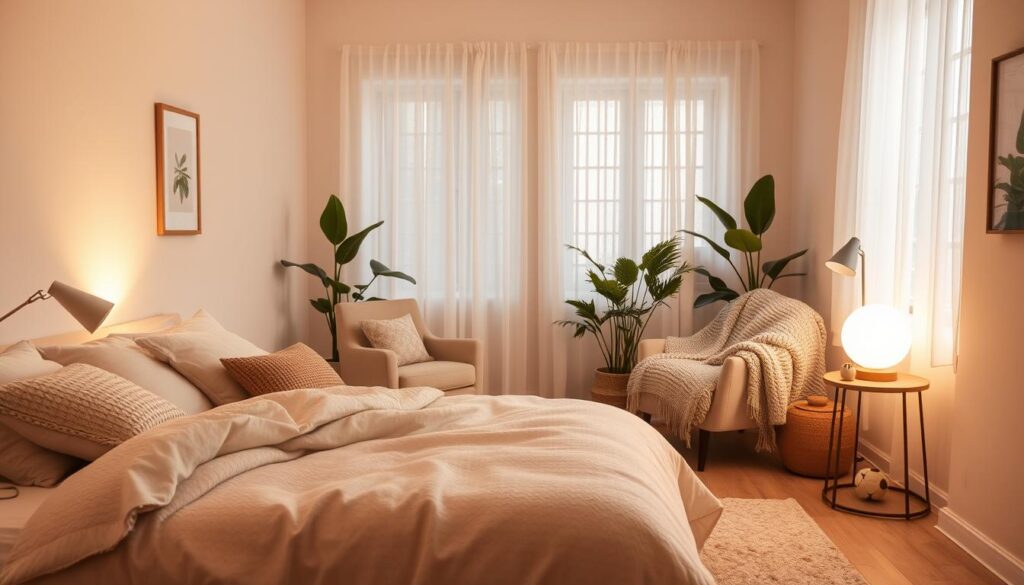
The secret to a relaxing bedroom is in the small, soft details. These details define your space. When you curate your environment, focus on how different textures work with your bedroom color schemes. A balanced palette sets the stage for a peaceful night.
The Role of Bedding and Pillows
High-quality bedding is key for luxury bedroom interiors. Choose natural fibers like Egyptian cotton or linen for breathability and softness. These materials make your bed feel luxurious.
Layering is crucial for comfort. Add plush pillows, weighted blankets, and soft throws for depth. Proper layering lets you adjust warmth as seasons change.
Utilizing Rugs for Warmth and Comfort
Rugs do more than cover the floor; they anchor your furniture. A soft, high-pile rug under or beside your bed is a gentle landing for your feet. It adds warmth to your room.
When picking a rug, think about material and size to match your decor. A well-chosen rug adds insulation and sound absorption. Wool or silk blends are durable and comfortable for your feet.
Storage Solutions That Blend With Design
Effective storage is key for a minimalist bedroom design. When things have their place, your room looks clean and calm. This makes it easier to relax and think clearly.
Clever Closet Organization Ideas
Maximizing your closet is crucial for a neat look. Use vertical organizers to make the most of every inch. Double hanging rods or pull-out drawers can double your space without extra furniture.
Clear bins or labeled baskets help keep small items together. This stops clutter from building up. When everything is easy to see and reach, you’re more likely to keep your closet tidy.
Opting for Built-in vs. Standalone Storage
Choosing between built-in and standalone storage depends on your small bedroom design needs. Built-in units fit perfectly into corners or sloped ceilings, giving a custom look. They’re ideal for those who want a permanent, high-end finish.
Standalone furniture, like armoires or dressers, offers flexibility. They’re great for those who move often or like to change their layout. These pieces can be statement items while still holding lots of clothes and linens. The table below shows the main differences to help you choose what’s best for you.
| Feature | Built-in Storage | Standalone Storage |
|---|---|---|
| Customization | High (Tailored to space) | Low (Standard sizes) |
| Installation | Professional required | Easy DIY assembly |
| Portability | Permanent fixture | Moveable |
| Cost | Higher investment | Budget-friendly |
Trends in Bedroom Interior Design
Exploring new styles in modern bedroom design lets you mix innovation with comfort. It’s important to choose designs that show your personality. Knowing the latest in bedroom interior design helps guide your next home update.
Current Color Trends to Consider
Color trends are moving towards calming, earthy tones. Think warm terracotta, soft sage greens, and deep blues. These colors help make a room a peaceful retreat.
Designers also like monochromatic schemes with different textures. This adds depth and sophistication. It keeps your space stylish without feeling too busy.
Integrating Smart Technology
Technology is key in today’s homes, and bedrooms are no exception. Start with automated lighting systems that change color based on the time. This helps your body adjust to the day and night.
Smart climate control and sound systems add convenience. But make sure to hide them. This way, they don’t mess up the look of your modern bedroom design.
The best bedroom interior design choices meet your long-term needs. Trends should inspire, not control your space. Choose what feels right to you, and your bedroom will stay a peaceful haven for years.
Finalizing Your Design: Final Touches
Turning a room into your own sanctuary is all about the details. A well-finished space shows off your style and offers a peaceful escape. It’s a place to unwind from the world outside.
The Importance of Decluttering
Clean surfaces let your decor shine. Getting rid of clutter brings calm and clarity. A neat room helps you focus and enjoy the thoughtfulness in your home.
Completing Your Space with Accessories
Choosing the right accessories makes a room feel luxurious. A West Elm throw or a Crate & Barrel vase can add personality. These touches make your room cozy and inviting.
Don’t be afraid to try new textures and colors that make you happy. Your bedroom should grow with you. Begin your makeover today and create a space that feels like home.