Did you know being near plants can lower stress by up to 15%? We think your home should be a peaceful escape from the world. Bringing nature into your home is a great way to feel better.
With smart indoor plant decor, you can turn any dull spot into a lively, air-filled haven. Our guide shows how these plants can make you happier and healthier while adding beauty to your space.
We’ll share cool indoor plant decoration ideas to help you create a balanced, healthy home. Let’s begin our journey to a fresher, more lively home today.
Key Takeaways
- Greenery significantly reduces daily stress and anxiety.
- Natural elements improve indoor air quality for better health.
- Strategic placement creates a balanced and aesthetic atmosphere.
- Choosing the right species ensures long-term success.
- Small changes lead to a more vibrant living space.
Benefits of Indoor Plant Decor
Adding plants to your home makes it a health haven. It’s not just about looks; it’s about living better. Indoor plant decor connects us to nature in our homes.
Improves Air Quality
Many things in our homes can harm our breathing. But, some plants clean the air. They act as natural air purifiers by removing harmful particles.
This makes our homes fresher and cleaner. It’s a simple way to improve our air.
- Spider Plants: Excellent at removing formaldehyde.
- Snake Plants: Known for releasing oxygen at night.
- Peace Lilies: Highly effective at breaking down harmful gases.
Boosts Mood and Productivity
Being around plants is good for our minds. It reduces stress and makes us feel calm. Plants help us focus better, making us more productive.
They bring a piece of nature into our busy lives. Whether we’re working or relaxing, plants help us stay calm and focused.
Enhances Aesthetic Appeal
Plants are also great for making our homes look better. With indoor plant styling, we can add texture and color. A fern or ivy can make a room feel warmer and softer.
Plants are like living art that changes over time. With indoor plant styling, we can make our homes vibrant and personal.
Choosing the Right Indoor Plants
Transforming your living area with houseplant decor needs careful plant selection. Not every home gets perfect sunlight or has the same conditions. By picking plants that fit your space, you ensure they thrive.
Choosing the right plants is key to successful indoor gardening decor. Whether you’re new or experienced, picking hardy plants saves time. Start with plants that do well in most American homes.
Low-Light Plants for Dark Spaces
Many parts of our homes don’t get much sunlight. But, they don’t have to be empty. Plants like the Snake Plant and the ZZ Plant do well in low light. They’re great for beginners because they need little water and care.
Air Purifying Plants
Improving your indoor air quality is a good start. Some plants clean the air by removing toxins. The Spider Plant and the Peace Lily are good choices. They look nice and help keep the air clean.
Pet-Friendly Options
Keeping your pets safe is important. Luckily, you can have beautiful plants without risking your pets’ health. Plants like the Boston Fern and Calathea are safe for cats and dogs. They add beauty without danger.
Adding these plants to your houseplant decor lets you enjoy nature safely. By picking the right plants, you make your home welcoming. Choosing wisely is the key to great indoor gardening decor in any room.
Creative Ways to Display Indoor Plants
To make your home a lush oasis, you need more than just plants. You need creative ways to show them off. Using vertical space and unique containers can turn simple plants into stunning highlights. Thoughtful indoor plant decor makes the most of your space and brings life to every corner.
Shelving Units and Plant Stands
Using furniture you already have is a smart way to organize your plants. Bookcases and open shelving are perfect for showcasing your houseplant decor. They let you create layers of height and texture. Group plants with similar light needs together to ensure they do well and look good.
Plant stands are also key indoor plant accessories that lift your plants off the floor. Stands of different heights add a dynamic look that draws the eye up. Here are some tips for a balanced display:
- Mix trailing plants with upright ones for contrast.
- Choose stands that match your home’s style, whether wood or metal.
- Put bigger plants on the floor and smaller ones on stands.
Hanging Planters
If you’re short on floor space, look up to expand your display. Hanging planters are great for adding houseplant decor without taking up space. They’re perfect for vining plants that cascade beautifully.
Hang planters from window frames or use tension rods for a floating garden look. This is great for small rooms where every inch matters. Make sure your hardware can hold the pot and damp soil’s weight.
Terrariums and Closed Ecosystems
For a modern, easy-care look, try terrariums. These glass containers create mini worlds that bring the outdoors in. They’re perfect for moss, ferns, and decorative stones.
Building a terrarium is a fun project that needs little care once it’s set up. They recycle moisture, making them ideal for those who don’t want to water every day. Just place them in indirect light and watch your tiny garden grow.
Incorporating Plants in Different Rooms
Choosing the right plant for each room can change your home’s feel. Every room has its own conditions that plants need to grow well. By picking plants that match the room’s light and humidity, you create a perfect balance.
Living Room Strategies
The living room is the heart of the home. It’s a great place for bold indoor plant design inspiration. Big plants like Fiddle Leaf Figs or Monstera add a natural touch and make the room feel bigger.
“To plant a garden is to believe in tomorrow.”
In small living rooms, group plants of different sizes on a console table. This adds depth and interest. Make sure your plants get enough light to stay healthy and green.
Kitchen Herb Gardens
The kitchen is perfect for plants that are also useful. A sunny spot is great for herbs like basil, rosemary, and thyme. Having fresh herbs nearby makes cooking fun and adds a refreshing scent to your kitchen.
- Place herbs in pots with proper drainage to prevent root rot.
- Rotate your pots weekly to ensure even growth toward the light.
- Use vertical wall planters if your counter space is limited.
Bedroom Relaxation Zone
A calm bedroom is key for rest. Choose plants like Snake Plants or Peace Lilies for their air-purifying qualities. These plants are easy to care for and help create a calming atmosphere.
Keep your bedroom plants simple for a clean look. A few well-chosen plants can make your bedroom a peaceful retreat. Adding nature to your bedroom helps you relax after a busy day.
Seasonal Plant Decor Ideas
Changing your plants with the seasons keeps your home lively and inviting. By updating your plants with the calendar, you can refresh your space. Simple changes in where you place your plants and adding seasonal decor can transform your home without a big overhaul.
Spring Refresh: Vibrant Flowers
As spring comes, we add colorful flowers to welcome the new season. Plants like orchids or peace lilies brighten up any room after a dull winter. For more ideas on decorating with plants, check out this link.
Fall Cozy Vibes with Foliage
In fall, our houseplant decor turns to plants with deep colors and textures. We group plants with dark leaves or patterns to match the outdoors. Adding natural elements like woven baskets or wooden stands creates a cozy feel as the days get shorter.
Winter Greenery for Warmth
In winter, we use hardy evergreens to keep our homes lively. These plants provide a lush background, making our homes warm and welcoming. By focusing on indoor plant decoration ideas with deep greens, we fight off winter blues.
Your houseplant decor should be as adaptable as the seasons. Feel free to move your plants and change their covers to match the season. This simple habit keeps your home vibrant all year round.
Matching Plants with Your Home Style
Choosing plants that match your home’s style makes it feel special. Good indoor plant styling means picking plants and pots that go well with your furniture and colors. This way, your plants add to your home, not mess it up.
Modern Minimalist Approach
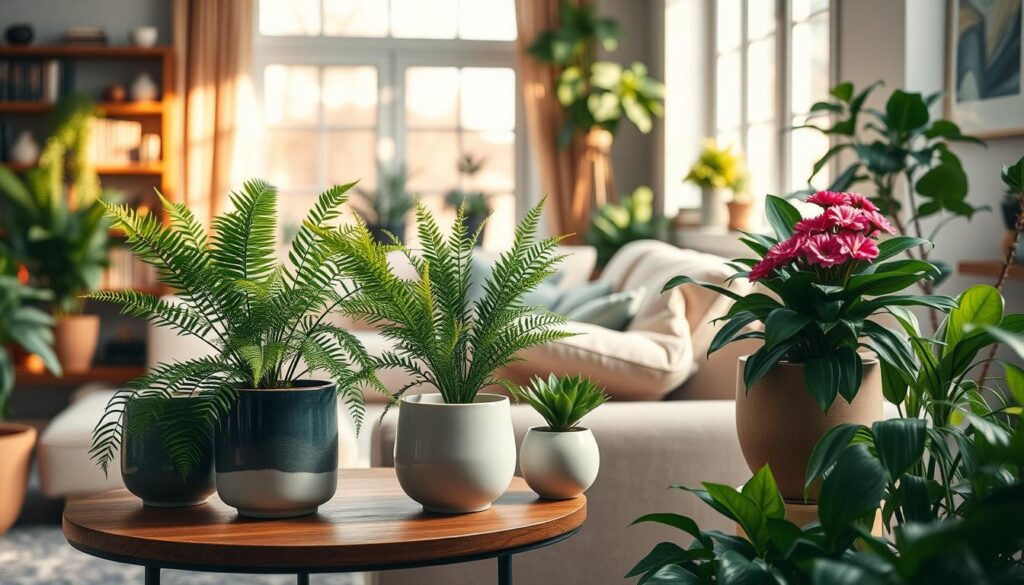
In a modern minimalist home, simplicity is key. Pick plants like Snake Plants or ZZ Plants for their clean lines. These plants fit well in a tidy space.
Choose pots in simple colors like matte black, white, or gray. Stay away from fancy designs. This keeps the focus on the plant’s natural beauty, perfect for a modern look.
Rustic and Bohemian Themes
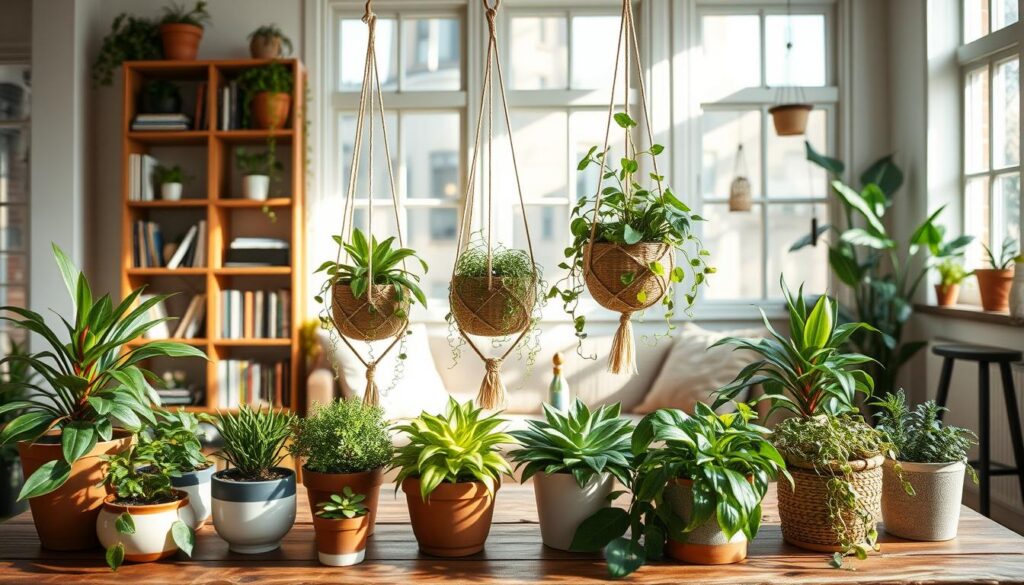
Rustic and bohemian homes love warmth and natural textures. Look for plants like Pothos or Philodendrons that add life. They make cozy spaces feel more lively.
Use containers from nature, like seagrass baskets or terracotta pots. These add charm and make your home feel welcoming.
Traditional and Classic Styles
Traditional homes look great with symmetry and elegance. Choose plants like Fiddle Leaf Figs or Boston Ferns for a polished look. Place them in pairs to anchor a room.
For planters, pick ceramic or porcelain with simple designs. This makes your plants fit right in with your home’s style. Here’s a guide to help you pick the right plants:
- Modern: Use geometric shapes and monochromatic colors.
- Rustic: Incorporate wood, clay, and soft, earthy textiles.
- Traditional: Focus on balanced placement and timeless, ornate containers.
Your plant choices should show your taste and respect your home’s design. By carefully choosing, you make every corner of your home beautiful.
Plant Care Essentials for Beginners
Starting your indoor gardening decor journey means learning to care for your plants. By creating a natural environment, you can avoid problems like leaf drop. These basic indoor plant care tips will keep your home lively and green.
Watering Guidelines
Watering is a key but tricky part of plant care. Beginners often overwater, causing root rot. Always check the soil moisture before watering.
- Stick your finger about two inches into the soil; if it feels dry, it is time to water.
- Ensure your pots have proper drainage holes to allow excess water to escape.
- Always empty the saucer beneath the pot to prevent the roots from sitting in stagnant water.
Optimal Light Requirements
Light is crucial for your plants, but each type needs different amounts. Some love direct sunlight, while others prefer soft, filtered light. Knowing these needs is key to good indoor gardening decor.
If your plant is stretching towards the light, it needs more. On the other hand, if leaves are scorched, the light is too strong. Moving your plants based on these signs is a smart indoor plant care tip.
Fertilizing and Soil Tips
Good soil is vital for plant health. Choose a high-quality, well-draining mix that keeps moisture without being too wet. Use indoor potting mix to avoid pests.
Fertilize mainly in spring and summer when plants are growing. In winter, they need less. Consistency is key when fertilizing, so follow the instructions to avoid harming your plants.
Designing a Home Office with Plants
Modern indoor plant decor can transform a dull office into a lively creative space. Adding nature to your work area boosts both your mental health and productivity.
Benefits of Plant Presence
Adding plants to your workspace reduces mental fatigue. They offer a break from screen time, which is good for your eyes.
Biophilic design, which includes plants, lowers stress. Feeling connected to nature while working makes you more balanced and calm.
Best Plant Choices for Focus
Picking the right plants is key for a clean, productive desk. Look for hardy plants that do well in office light without needing constant care.
- Snake Plants: Great for busy people because they’re easy to care for.
- Golden Pothos: Their vines add a soft touch to shelves or high cabinets.
- ZZ Plants: Perfect for dark corners, ideal for offices with little light.
Using these plants in your decor keeps your office focused, not cluttered.
Arranging for Space and Comfort
Good plant placement uses vertical space to keep your desk clear. This makes room for your work and documents.
Think about using floating shelves or tall stands for your plants. This keeps your space organized and adds beauty. Plants at eye level or above create a lush look without clutter.
DIY Plant Decor Projects
We think making your own plant accessories is the best way to get a unique look. Doing these projects lets you make your space special and save money. Looking into indoor plant decoration ideas helps you make a home that feels real and inviting.
Upcycled Planters
You can turn common items into cute homes for your plants. Old tin cans, wooden crates, or vintage teacups are great indoor plant accessories with a little cleaning and prep.
- Make sure your containers drain well by drilling holes in the bottom.
- Use safe paints to make metal or plastic items look new.
- Put plastic inside wooden boxes to keep them dry.
Custom Plant Stands
Building your own stands means your plants fit your space perfectly. Whether it’s a small corner or a big area, custom stands give your plants the right height and support.
Think about using old wood or dowels for simple frames. These not only hold your plants but also draw attention in your room.
| Project Type | Difficulty | Material Needed |
|---|---|---|
| Tiered Stand | Medium | Wood Planks |
| Hanging Shelf | Easy | Rope and Board |
| Corner Pedestal | Hard | Plywood |
Painted Pots for a Personal Touch
Adding color to terracotta pots is a great way to add modern indoor plant decor. You can use patterns, bright colors, or textures to match your furniture.
Use acrylic paints and a waterproof sealant to keep your designs looking good. This simple trick turns basic items into artistic statements that show off your style.
Plant Decor Mistakes to Avoid
Getting the perfect indoor plant styling means avoiding common mistakes. Even the most passionate plant lovers can make errors. These mistakes can harm our plants and our indoor gardens. By spotting these issues early, we can fix them and keep our plants thriving.
Overwatering Risks
One big mistake in houseplant decor is watering too much. Many think more water means more growth. But, this can cause the soil to be too wet and harm the roots. Always check the soil moisture before adding more water.
Poor Placement in Your Space
Where you put your plants is just as important as how you water them. Plants near drafts, air conditioning vents, or heaters can suffer. Find a spot that’s stable and matches the plant’s natural home for the best results.
Ignoring Plant Needs
Every plant is different, and treating them all the same is a mistake. Using generic indoor plant care tips without knowing the plant’s specific needs can harm it. Researching each plant in your collection will help keep your home looking great and your plants healthy.
Exploring Technology in Plant Care
Technology has given us tools to make indoor gardening easier. With modern gadgets, we can keep our plants healthy even when we’re busy. These indoor gardening decor advancements help us maintain a lush home.
Smart Pot Solutions
Smart pots are a big step for plant lovers. These indoor plant accessories have sensors for soil moisture, light, and temperature. They alert your phone when your plant needs care.
Many smart pots have self-watering reservoirs. This means your plants get the right amount of water without risk of root rot. It’s great for those who forget to water.
Apps for Plant Maintenance
Digital apps have changed how we care for plants. They let us set schedules for watering, pruning, and repotting. These apps also offer indoor plant care tips for different plants.
Some apps can even identify plant diseases or pests by scanning leaves. This proactive approach helps solve problems early. Keeping a digital record of your plant’s growth is rewarding and educational.
Automatic Watering Systems
Automatic watering systems are perfect for those who travel a lot. They range from simple drip kits to complex pumps. They keep your plants watered while you’re away.
Using these systems means you can have a healthy garden without always being there. Consistency is the key to plant health. These high-tech solutions help your garden thrive all year.
The Future of Indoor Plant Decor Trends
Our homes are becoming living ecosystems that focus on wellness and harmony with nature. We’re moving towards a lifestyle where every choice helps the planet. This change in indoor plant decor makes us think differently about nature in our homes.
Hypertufa and Natural Materials
Designers are now choosing raw, organic textures to make our spaces feel grounded. Hypertufa planters have a stone-like look that brings life to any room. They help with drainage and add a natural charm to your indoor plants.
Biophilic Design Principles
We’re using biophilic design to connect modern homes with nature. This method aims to bring in lots of natural light and plants to lower stress. It turns our homes into peaceful spaces that support our health.
Sustainable Practices in Plant Decor
Responsible gardening is key to the future of home decor. We promote using peat-free soil, recycled water, and eco-friendly pots. Brands like Bloomist offer these options. These choices keep your decor beautiful while protecting our planet. We aim to help you create a greener, more mindful home.