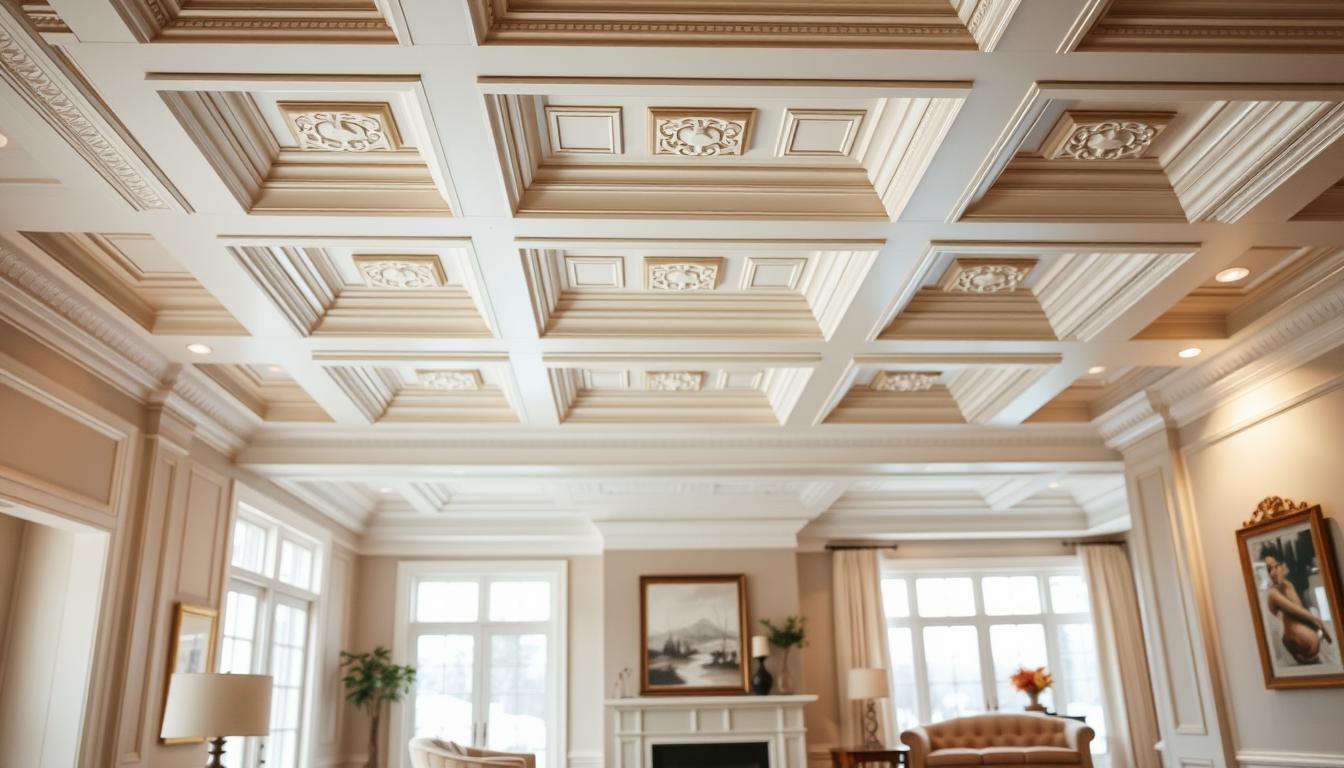
Did you know that the fifth wall of your room is almost 20% of your total visual space? Yet, it’s often left blank. Most homeowners focus on paint colors and furniture, missing a chance to add architectural depth to their rooms.
We think your home should show your unique personality in every detail. By picking the right coffered ceiling ideas, you can change any room’s character. These classic features bring luxury and sophistication that plain surfaces can’t.
This guide is a great start for those wanting to improve their interior design. We’ll show how careful structural choices make your home look better and feel welcoming for everyone.
Key Takeaways
- The ceiling is an underutilized design element that significantly impacts room aesthetics.
- Architectural treatments add immediate value and visual interest to your home.
- Intentional design choices help create a cohesive and sophisticated living space.
- Depth and texture are essential for transforming plain rooms into custom environments.
- Proper planning ensures your renovation project achieves a timeless, high-end look.
Understanding Cofferred Ceilings
We think the ceiling is often overlooked in home design. As we move toward 2025, we’re seeing a big change. People want more than just plain ceilings; they want something that adds character and purpose.
A coffered ceiling design is a great choice for those looking to stand out. It adds structure and depth, turning a simple space into something elegant.
What is a Coffered Ceiling?
A coffered ceiling has a grid of recessed panels. These panels are framed by beams, creating a sunken, geometric pattern. Modern designs prefer clean lines and balanced shapes, unlike older styles.
The structure includes:
- Primary Beams: The main beams that set the grid’s layout.
- Secondary Beams: Smaller beams that make the recessed squares or rectangles.
- Recessed Panels: The flat surfaces between the beams, which can be painted or textured for contrast.
Benefits of Coffered Ceilings
The main coffered ceiling benefits are more than just looks. They add visual depth, changing how we see a room’s size.
Here are some key benefits for your next renovation:
- Enhanced Intimacy: These ceilings make big rooms feel cozy and welcoming.
- Architectural Interest: They draw the eye upward, adding luxury to your home.
- Improved Acoustics: The design can help reduce echoes in high-ceilinged areas.
Ultimately, choosing this design lets you customize your home’s mood. Whether you like a simple or bold look, coffered ceilings offer unmatched versatility in modern design.
Classic Coffered Ceiling Styles
Choosing the right look for your home starts with understanding the most enduring coffered ceiling styles. By selecting a design that aligns with your home’s existing architecture, you can create a cohesive and polished aesthetic that stands the test of time.
Traditional Wood Beams
Wood-paneled ceilings are favored by architects to anchor a room and imbue it with warmth. Whether you prefer a rustic cabin feel or a formal library aesthetic, the choice of wood grain and stain color makes a significant difference.
Darker, rich stains often provide a sense of luxury and weight, perfect for studies or dining areas. Lighter, natural finishes can make a space feel airy while still providing the structural depth that defines a traditional coffered ceiling.
Elegant Plaster Designs
If your home features a more historical or period-inspired layout, plasterwork offers a seamless and sophisticated alternative to wood. These designs often incorporate intricate molding that flows naturally into the ceiling surface.
Plaster is an excellent choice for homeowners who want a clean, monochromatic look that emphasizes architectural geometry over material contrast. This style works beautifully in formal living rooms where you want to highlight craftsmanship without overwhelming the space with heavy textures.
Ultimately, whether you choose the organic appeal of timber or the refined finish of plaster, your ceiling will serve as a stunning focal point. Taking the time to match these classic elements to your home’s character ensures a result that feels both intentional and timeless.
Modern Takes on Coffered Ceilings
Modern design is giving ceiling paneling a fresh look. We’re moving away from heavy, ornate designs to cleaner, more refined ones. This change makes a modern coffered ceiling fit right into today’s homes without feeling old-fashioned.
Minimalist Designs
Today, we love designs that are clean and precise, like rafter-like approaches. Designers are inspired by Scandinavian or Japanese patterns for a sense of calm and order. Thinner profiles give a look that’s sophisticated yet feels light.
This simple style in coffered ceiling design makes a big impact. Instead of deep boxes, we see sleek, shallow grids that lift your gaze. These designs are perfect for open-concept spaces, keeping the area feeling open.
Bold Colors and Finishes
While white is still popular, bold colors are on the rise. Painting coffers dark and beams light creates a striking contrast. This adds depth and character to any room, making the ceiling stand out.
For a luxurious touch, try metallic finishes or natural wood stains. Adding these to your coffered ceiling design brings a high-end feel. These bold choices show that a modern coffered ceiling can match any style.
Coffered Ceilings in Different Rooms
Every room in your home is a blank canvas for ceiling design. The best projects blend the room’s function and size with the right ceiling. By picking the right depth and pattern, you can transform any area.
Living Room Inspirations
In the living room, a grand grid pattern can define your main seating area. We suggest using larger, deeper coffers to add architectural weight and sophistication. This makes the space feel intentional and well-designed.
Dining Room Ideas
The dining room is great for creating a focal point above your table. Aligning a central coffer with your chandelier draws the eye up, adding intimate luxury. This design choice makes every meal feel special.
Bedroom Enhancements
In the bedroom, we focus on calm and serenity. We use softer textures and shallower profiles to keep the atmosphere peaceful. Adding subtle, recessed lighting in these coffers provides a gentle glow for relaxation.
| Room Type | Primary Goal | Design Focus |
|---|---|---|
| Living Room | Define Seating | Deep, Grand Grids |
| Dining Room | Highlight Centerpiece | Centralized Symmetry |
| Bedroom | Create Serenity | Soft, Shallow Profiles |
Customizing Your Coffered Ceiling
Changing your ceiling grid can turn any room into a unique work of art. By adjusting the beam depth and spacing, we make sure the design fits your space perfectly. Personalization is key to a design that feels right, not forced.
Choosing Shapes and Layouts
The shape of your grid shapes the room’s feel. Square patterns offer a classic, balanced look. Rectangular shapes can make a room seem longer or highlight a fireplace. Proportion is everything when picking your coffers’ depth.
For small ceilings, use shallower beams to avoid a cramped feel. Tall ceilings are perfect for deep coffers, adding grandeur. Sketching your grid helps see how it fits with your walls.
Selecting Materials and Textures
Picking the right coffered ceiling materials is crucial. Wood is a top pick because it looks great in any room, adding warmth. You can choose from solid hardwood’s grain or MDF’s smooth finish, shaping the ceiling’s feel.
Here’s a comparison to help you decide:
| Material | Weight | Best For | Finish |
|---|---|---|---|
| Solid Wood | Heavy | Luxury/Traditional | Stain or Paint |
| MDF | Light | Budget/Modern | Paint Only |
| Polyurethane | Very Light | DIY Projects | Paint Only |
The texture you pick should match your home’s style. A smooth finish is modern and clean, while wood adds a rustic touch. By choosing the right coffered ceiling materials, we make a ceiling that’s both strong and beautiful.
Lighting Considerations for Coffered Ceilings
We think lighting is key to making a coffered ceiling stand out. Without the right light, even the most detailed designs can look flat. Thoughtful placement of lights makes your ceiling a highlight, even at night.

Integrating Ambient Lighting
Ambient lighting sets the mood of a room. Recessed cans in the coffers create a soft, uniform glow. This light fills the space without harsh shadows, great for big rooms.
LED strips along the beams add a modern flair. They give a subtle light that highlights the ceiling’s design. This is ideal for bedrooms or cozy living areas.
Highlighting Architectural Features
To make your ceiling really shine, use directional lighting. Spotlights can be adjusted to focus on parts of the grid, creating contrast. This architectural emphasis turns the ceiling into a work of art.
For a luxurious look, mix backlighting with walnut panels. The light on the wood grain adds warmth and luxury. This combo is perfect for dining rooms or formal studies.
| Lighting Type | Best Use Case | Visual Effect |
|---|---|---|
| Recessed Cans | General Room Illumination | Soft, even coverage |
| LED Strips | Perimeter Accent | Modern, subtle glow |
| Directional Spots | Highlighting Details | Dramatic, high contrast |
| Backlighting | Luxury Finishes | Ethereal, warm depth |
DIY vs. Professional Installation
Upgrading your ceiling is a big decision. It depends on your skills, budget, and time. You can choose to do it yourself or hire a pro. Either way, getting ready is key to a great finish.
Pros and Cons of DIY
Doing it yourself can save money and be rewarding. You can use U-shaped supports for faux beams, making it easier than traditional framing. If you have the right tools and patience, you can get professional results on your own time.
But, it’s hard work and needs careful attention. You’ll find DIY coffered ceiling ideas and tips online. Remember, mistakes can waste materials and cause delays.
When to Hire a Professional
For complex designs or high ceilings, a pro is best. They make sure your ceiling is safe and meets building codes.
Getting a pro means less worry about safety and durability. They handle heavy materials and tricky lighting. Your choice should match your comfort with construction and the size of your project.
| Feature | DIY Installation | Professional Help |
|---|---|---|
| Cost | Lower (Materials only) | Higher (Labor included) |
| Time Required | Extended (Self-paced) | Efficient (Fast turnaround) |
| Skill Level | Intermediate to Advanced | Expert/Licensed |
| Complexity | Best for simple grids | Best for custom designs |
Budget-Friendly Cofferred Ceiling Ideas
Many people think fancy ceilings cost a lot. But, you can get a high-end look without spending a lot. By looking for coffered ceiling ideas that save money, you can make any room look great.
Cost-Effective Materials
You don’t need expensive woods for a beautiful ceiling. Lightweight foam moldings or plywood strips work well. They’re easy to put up and cut down the coffered ceiling cost.
Buying standard trim from your local store can help you make a custom grid. Many DIY fans say these materials give a clean look that holds paint well. With smart planning, you can save money and still get a big visual impact.

“Design is not just what it looks like and feels like. Design is how it works.”
Creative Alternatives
If you want a project that’s easy, try painting a faux-grid. Use a darker paint to make squares look like real coffered ceilings. This is a great coffered ceiling idea for those watching their budget.
Another cool idea is to use textured wallpaper in the grid squares. It adds sophistication and makes the ceiling look deeper. Here are some ways to save money while making your ceiling look amazing:
- Use lightweight polyurethane beams for a wood look.
- Add crown molding for depth around the edges.
- Use different paint colors to make the grid lines stand out.
Maintenance Tips for Coffered Ceilings
Your ceiling is the crown of your home’s design. Keeping it in great shape helps your home stay luxurious and valuable for years.
Routine Care and Cleaning
Dust often hides in the deep corners of your ceiling grid. Use a soft microfiber duster or a vacuum attachment to clean these spots often. For wood surfaces, a damp cloth is best. But, avoid harsh chemicals that can damage the finish.
Managing Minor Repairs
Over time, joints in your ceiling may develop small cracks. You can fix these with high-quality wood filler or caulk. Then, apply a fresh coat of paint.
If you see peeling, lightly sand the area. This makes it smooth for touch-ups. Adding a vintage chandelier or crown molding can instantly add character to your space. These small touches can greatly improve your room’s look. We’d love to see your renovation photos to inspire others.