Did you know 73% of managers are upgrading their current assets instead of buying new ones? This change shows a smart move to increase the value of what they already have. We think focusing on what you already own is the best way to grow your money.
By doing rental property renovation smartly, you can draw in better tenants and cut down on empty spaces. Making smart changes turns a regular place into a place people want to live. These updates are key for making more money now and in the future. Let’s see how you can use these changes to make more money.
Key Takeaways
- Upgrading existing units is a top priority for 73% of industry professionals.
- Targeted improvements help attract reliable, long-term tenants.
- Modernizing spaces effectively reduces costly vacancy periods.
- Strategic investments enhance both immediate revenue and asset value.
- Focusing on current holdings is often more profitable than new acquisitions.
Understanding Rental Property Renovation
Rental property renovation is more than just painting. It’s a smart move for your future. We improve homes to make them better, look nicer, and worth more. This keeps our places appealing to good tenants.
What is Rental Property Renovation?
A rental property renovation means making smart upgrades. It’s about making a space modern without spending too much. We do small fixes like new cabinet handles or big changes like new floors or kitchens. These updates keep our properties from losing value.
Even small changes can make a big difference. A good rental property makeover meets today’s market needs. We focus on key areas to get the most from our budget.
Benefits of Renovating Rental Properties
Renovating gives us an edge in a tough market. A modern look means we can charge more and find better tenants. This leads to fewer empty units, as tenants want to stay in nice homes.
The table below shows how updates help a rental unit:
| Feature | Pre-Renovation Status | Post-Renovation Impact |
|---|---|---|
| Kitchen Surfaces | Worn countertops | Increased rental appeal |
| Lighting | Dim, outdated fixtures | Brighter, modern ambiance |
| Flooring | Stained carpeting | Durable, easy-to-clean surfaces |
| Tenant Quality | High turnover risk | Long-term, stable occupancy |
Seeing rental property renovation as a long-term plan is smart. It helps us keep our properties valuable. By spending wisely, we make sure our investments pay off for years.
Assessing Your Property’s Current Condition
We think a good property remodeling plan starts with a detailed walk-through. Before big changes, you need to know what you’re working with. This first check helps make sure your money goes to the best projects.
Conducting a Property Inspection
Look closely at your property to find both big and small problems. Check every room for water damage, electrical issues, or old plumbing. Fixing these issues first saves you from bigger problems later.
When it’s time to upgrade, look into professional services for remodeling. This ensures your work is done well. Sort tasks into must-dos and nice-to-haves. Here’s a checklist for your inspection:
- Structural Integrity: Check foundations, roof, and walls.
- Safety Systems: Test smoke detectors, carbon monoxide alarms, and locks.
- Utility Efficiency: Look at HVAC filters, water heaters, and insulation.
Identifying Key Areas for Improvement
After inspecting, focus on a rental property makeover that attracts your target renters. Kitchens and bathrooms are key for a good return. These areas greatly affect the unit’s value.
Go for cosmetic updates that make a big difference without a full tear-down. New lighting, fresh paint, or updated fixtures can change a room a lot. By spending on these areas, your makeover will be both affordable and appealing.
Setting a Renovation Budget
Before you start your property refurbishment, you need to plan your budget. A clear financial plan helps keep your project profitable and of high quality. It also protects your cash flow and keeps your investment goals in sight.
Estimating Costs
Understanding tax implications is key to accurate cost estimation. As a cash basis taxpayer, you deduct rental expenses in the year paid. It’s important to know the difference between routine repairs and capital improvements.
Routine repairs are fully deductible in the current tax year. But, major capital improvements are spread out over years through depreciation. A tax professional can help you sort these costs for better financial management during a rental home renovation.
Contingency Planning
Construction projects often face unexpected challenges. It’s wise to set aside 10% to 20% of your budget for a contingency fund. This fund helps cover surprises like outdated wiring or hidden water damage without halting your project.
This safety net keeps you calm during the property refurbishment process. It stops you from using personal savings or taking on debt when problems come up. A well-prepared contingency plan is a sign of a professional approach to any rental home renovation.
Prioritizing Renovation Projects
Not every renovation task is the same, so planning is key for your property refurbishment. Focus on what tenants value most to make a smart investment. This way, every dollar you spend helps your bottom line.
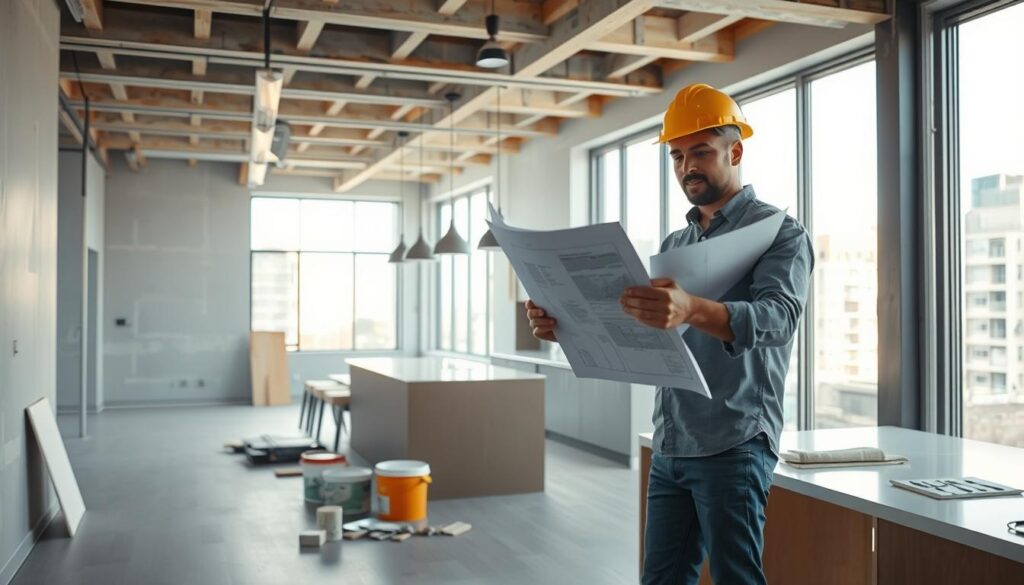
High-Impact Renovations for Maximum ROI
Kitchens and bathrooms are top choices for property remodeling. A modern kitchen is crucial and can increase rent by $50 to $100 a month. These areas are key to attracting tenants who are willing to pay more.
Updating these spaces with new fixtures, countertops, or appliances boosts your property’s appeal. These changes justify higher rent and attract better tenants. Prioritizing these areas is essential for success.
Cosmetic vs. Structural Improvements
It’s important to know the difference between cosmetic and structural updates. Cosmetic changes like fresh paint or new lighting are budget-friendly and can refresh a space quickly. They help keep your property competitive.
Structural improvements, on the other hand, ensure the building’s safety and integrity. They might not be as flashy but are crucial for your property’s long-term health. A good investor knows how to balance these two types of improvements.
| Project Type | Primary Benefit | ROI Potential |
|---|---|---|
| Kitchen Refresh | Increased Monthly Rent | High |
| Bathroom Update | Tenant Retention | High |
| Structural Repair | Asset Longevity | Medium |
| Cosmetic Painting | Faster Leasing | Medium |
Choosing the Right Design
We think the right design is key to making your property appealing and lasting. When you start a rental home renovation, aim to make a welcoming space for many tenants. A smart design makes your property shine in a crowded market.
Trends in Rental Property Design
Today, updating rental properties means going for a clean, flexible look. Many landlords choose neutral colors like soft grays, warm beiges, or crisp whites. These colors make rooms look bigger and let tenants see their furniture.
Energy-saving features are also a must for today’s renters. Adding LED lights, smart thermostats, and low-flow fixtures cuts down on bills. It shows you care about the environment and your tenants’ money.
Balancing Aesthetics and Functionality
Finding the right mix of style and practicality is the big challenge. You want your property to look great but also be tough. Picking durable, low-maintenance surfaces saves you time and money later.
Choose materials that are easy to clean and can handle a lot of use. For example, luxury vinyl plank flooring looks like hardwood but is much better at resisting scratches and water. Making these smart choices keeps your space looking good for years.
| Design Element | Aesthetic Benefit | Functional Advantage |
|---|---|---|
| Neutral Paint | Bright and spacious feel | Easy to touch up between tenants |
| Vinyl Plank Flooring | Modern wood appearance | Waterproof and scratch-resistant |
| Quartz Countertops | High-end luxury look | Stain-resistant and durable |
| LED Lighting | Warm, inviting atmosphere | Energy-efficient and long-lasting |
Hiring the Right Professionals
When you choose to update rental properties, the team you pick matters a lot. Renovations can be tricky, so many landlords hire apartment renovation services to help. This way, you get quality work done without breaking the bank.

Finding Reputable Contractors
Looking for the right team starts with careful checks. Always ask for references and look at their past work. Reliable contractors keep your project on schedule and avoid extra costs.
Try to do renovations when the property is empty. This keeps your cash flow steady. Clear communication with your team about deadlines is key for a smooth process.
The Role of a Property Manager
Working with a property manager can make things easier. They have a list of trusted contractors for apartment renovation services at good prices. This saves you time and stress.
A property manager is your main contact for the project. They make sure everything is done well, so you can focus on other things. Their help is a valuable asset for keeping your property’s value up.
Permits and Regulations
Understanding building codes and permits is crucial to protect your investment. When you start a rental property improvement, make sure all changes follow local rules. Not following these rules can lead to fines and even undoing your work.
Preparation is key for a smooth project. By following the law, you protect your tenants and keep your property’s value high. Professional apartment renovation services always stress the importance of legal compliance from the start.
Understanding Local Building Codes
Building codes ensure structures are safe, clean, and sturdy. They cover everything from wiring to handrail heights. When improving a rental property, your design must match these standards.
These codes change often to include new safety features and materials. Not keeping up can lead to failed inspections and safety risks. Always check with your local building department or a licensed contractor to ensure your plans are up to date.
Navigating the Permit Process
The permit process might seem tough, but it’s essential for big renovations. Getting the right permits proves your upgrades are legal, important for insurance and selling. If you use apartment renovation services, they’ll handle the permits for you.
You usually need permits for structural changes or big system updates. Projects needing approval include:
- Structural modifications, like removing walls that hold up the building.
- Electrical system upgrades, like new wiring or panels.
- Plumbing renovations, such as moving pipes or adding new fixtures.
- HVAC installations, which involve complex heating and cooling systems.
After you submit your plans, a city inspector checks them. They make sure they meet local laws. A final inspection after the work is done confirms it was done right. This way, your property stays valuable and compliant for the future.
Marketing Your Newly Renovated Property
After finishing your investment property renovation, you need to tell a great story to potential renters. You want to show how your hard work meets their needs. By doing this well, you can fill your property quickly and find reliable tenants.
Effective Online Marketing Strategies
Digital platforms are your property’s main showcase. Use professional photography to show off your upgrades, like new kitchens or fancy floors. Good photos help build trust and get people to visit.
Make sure your property is listed on top rental sites and social media. Being consistent helps you reach more people. Targeting the right audience with detailed descriptions attracts renters who want modern features.
Highlighting Renovations in Listings
In your listing, focus on the benefits of your rental property improvement. Explain how your changes make life better for renters. For example, new windows save money and keep you cozy.
By clearly showing the value of your upgrades, you can charge more rent. People are willing to pay more for a modern, clean space. Showing your attention to detail proves you’re a caring landlord.
Your marketing should match the quality of your renovation. A well-written listing can make your property stand out. By focusing on the right features, you turn a renovation into a desirable home.
Common Renovation Mistakes to Avoid
Many property owners make costly errors during renovations. These mistakes could be avoided with careful planning. It’s easy to lose sight of your budget and market reality. Knowing these traps is key to protecting your finances and ensuring success.
Over-Improving for the Area
One big mistake is upgrading too much for the local area. High-end finishes look great but might not raise your rent. If your property is the most expensive nearby, you might not get your money back.
Before starting big projects, research similar properties. Focusing on value-add improvements keeps your profits high. Learn more about these mistakes to spend your money wisely. Check out this guide on renovation mistakes to avoid.
Neglecting Market Trends
Modern tenants have clear expectations. Failing to meet these can leave your property empty. Using landlord renovation services keeps you up-to-date with what renters want. Today, smart home tech, energy-efficient appliances, and open layouts are must-haves, not just extras.
Ignoring these trends makes your property seem old, no matter the renovation cost. To stay competitive, consider these points:
- Energy efficiency: Lower bills are a big draw for tenants.
- Connectivity: Fast internet is crucial for remote workers.
- Durability: Pick materials that last and look modern.
By staying informed and avoiding these mistakes, your rental property renovation will stay valuable and attractive for years.
Evaluating Success Post-Renovation
Your journey to boost rental income needs a clear look at your hard work’s results. We think tracking specific metrics turns a simple project into a scalable business model.
Measuring the Increase in Rental Income
Compare your new monthly rent to the total capital spent on renovation. This shows your actual return on investment. It also justifies future upgrades.
Watch how quickly your units lease after improvements. Faster turnover times mean your updates meet market demands well.
Gathering Tenant Feedback
Direct input from your residents gives the best insight into your work’s quality. We suggest sending brief surveys to learn which features improved their living experience.
This data helps you refine your strategy for future renovations. By listening to your tenants, you build a reputation for quality. This keeps your properties occupied and profitable for years.