Did you know a high-quality, hand-woven floor piece can last over a century? These items are more than just home decor. They are historical artifacts that add artistic value to your space.
Starting out can feel overwhelming. That’s why we made this Persian rug buying guide. It helps you buy with confidence.
Learning how to choose a Persian rug means finding the perfect fit for your home. We want to make this journey exciting and easy for you.
Key Takeaways
- Authentic hand-woven pieces can last for generations with proper care.
- Always inspect the underside for natural, slightly imperfect knot work.
- Genuine items are crafted from natural materials like wool, cotton, or silk.
- Check that the fringe is a natural extension of the foundation, not glued.
- Use a quality rug pad to protect your investment in high-traffic areas.
Understanding Persian Rugs
Learning about authentic craftsmanship is key to our Persian rug shopping tips. These rugs mix art and skill, shaped over thousands of years.
Knowing what makes a rug quality ensures it adds beauty to your home. An informed buyer is more confident.
What Makes a Rug ‘Persian’?
A rug is truly Persian if made in modern-day Iran. They are renowned for detailed knotting and quality wool or silk.
The rug’s authenticity depends on its region of origin. Each area has its own looms and traditional methods.
Historical Significance of Persian Rugs
Persian rugs’ history is tied to the Persian Empire’s culture. For centuries, they showed status, wealth, and art in royal courts.
They were also key for nomadic life and religious events. Today, they are prized artifacts linking modern homes to history.
Different Types of Persian Rugs
Styles vary between tribal and city rugs. Tribal rugs have bold, geometric designs and natural dyes.
They have a looser weave, sometimes with 50 knots per square inch. City rugs have complex, curvilinear patterns, sketched by palace artists.
Knowing these differences is crucial for our Persian rug shopping tips. Whether you like tribal or city rugs, understanding them shows the extraordinary effort in each rug.
Key Characteristics of Persian Rugs
Knowing a rug’s details is key to a smart buy. A Persian rug buying guide helps you see beyond the surface. These rugs are more than floor coverings; they’re art pieces meant to last for generations.
Materials Used in Persian Rugs
Quality rugs start with the right materials. Most are made from hand-spun wool, known for its softness and durability. The wool is dyed with natural pigments, keeping colors bright for years.
With proper care, a Persian rug can last over 100 years. This is thanks to top-notch, organic materials that improve with age. Learn more about these rugs in this ultimate guide to Persian rugs.
Styles and Design Patterns
Persia’s regions have their own unique styles, from geometric to floral. These designs tell stories of the weavers’ culture and environment. Design symmetry and storytelling are common themes.
Whether you like bold or classic, there’s a style for you. These designs are more than decor; they’re a piece of history. Choosing a rug with a story adds depth to your home.
Knotting Techniques Explained
The quality of a rug is shown in its knots. Buying a handmade Persian rug means you’re getting a piece made with care. Each knot is tied by hand, making the rug strong and durable.
Looking at the rug’s back shows the weaver’s skill. More knots mean a more detailed and lasting design. Understanding these details helps you find a true treasure for your home.
The Art of Selecting the Right Size
When you learn how to choose a Persian rug, size is key. A rug that’s too small can make a room feel off. On the other hand, a rug that’s too big can overwhelm your furniture. Finding the right size ensures your rug enhances your decor beautifully.
Measuring Your Space
Start by measuring your floor with a tape measure. Use painter’s tape to mark out where the rug will go. This helps you see how the rug will fit with your furniture.
In living areas, make sure furniture legs sit on the rug. This creates a cohesive look. For dining rooms, the rug should be big enough to fit chairs around the table.
Understanding Rug Dimensions
Size affects a rug’s value. Bigger rugs take more time and materials to make. A master weaver spends more time on large rugs than small ones.
Always check the rug’s dimensions with the seller. Handwoven rugs can vary slightly in width. These small differences show the rug’s authenticity, not a flaw. Knowing this helps you pick the perfect rug for your home.
Choosing the Right Shape
Rectangular rugs are common, but think about your room’s shape. Round rugs are great for entryways or under circular tables. Square rugs work well in square rooms or to define a seating area.
Don’t be afraid to try unique shapes if your space allows. The goal is to enhance your home’s flow while keeping balance. Choosing the right size and shape avoids common mistakes that lead to regret.
Assessing Quality and Value
The beauty of a rug comes from its construction and materials. When you start buying a handmade Persian rug, look beyond the design. Use Persian rug quality criteria to spot real art from fake.
Identifying High-Quality Persian Rugs
Start by checking the rug’s back. A top-quality weave will match the front design perfectly. Look for tight, even knots that show a lot of skill.
Consistency is important, but so is the wool’s feel. It should be soft but strong. Natural dyes give a rich color that synthetic dyes can’t match.
Handwoven vs. Machine-Made Rugs
Handmade rugs have small flaws that show they’re made by people. These flaws add to the rug’s value. They prove it’s not made by a machine.
Machine-made rugs seem too perfect. They lack the soul of a handmade rug. When you buy a handmade Persian rug, you get a piece of history.
Factors That Affect Price
Many things affect a rug’s price. A good Persian rug price guide helps you understand these. Knot density is key. More knots mean more time and skill, making the rug more detailed and durable.
The material also matters a lot. Wool or silk rugs are more expensive because they last longer and look better. Use this Persian rug price guide to find a rug that’s worth your money.
Color Psychology in Rug Selection
The colors in a Persian rug do more than just decorate. They set the mood of your room. Choosing the right colors can turn a cold space into a cozy one.
The Impact of Color in Your Space
Natural dyes give a depth and richness that synthetic dyes can’t match. For ages, artisans have used madder root to create deep reds. These colors age beautifully, adding to the rug’s charm.
“Color is a power which directly influences the soul.”
Popular Color Palettes for Persian Rugs
Traditional Persian rugs have a mix of colors with deep meanings. Colors like deep reds, royal blues, and earthy ochres are timeless. They create a balance that draws the eye and grounds the room.
Choosing a Persian rug means considering the color’s intensity. Darker colors are great in bright rooms as a bold statement. Lighter colors can make small or dark rooms feel bigger and brighter.
Matching Colors with Interior Design
Adding a rug to your decor needs a careful eye for balance. A bold, colorful rug can contrast well with neutral furniture. But, if your room is already busy, a simpler rug might be better.
Choosing a Persian rug is about trusting your taste and thinking about your home’s light and flow. By focusing on how colors make you feel, your rug will bring joy for years.
Where to Buy Authentic Persian Rugs
Finding the right place to buy is key to getting a beautiful, real Persian rug for your home. Start by following Persian rug shopping tips to feel confident in your choices. You can look online or visit a showroom. The most important thing is to choose a good partner.
Reputable Online Retailers
Shopping online from a trusted seller lets you see many rugs without leaving home. The best Persian rug sellers show clear pictures and tell you where the rug comes from. Make sure they have good return policies and safe ways to pay.
Digital platforms can be cheaper because they don’t have the costs of a physical store. But, check the seller’s reputation with reviews and certifications. This way, you know you’re getting a real rug, not a fake one.
Local Stores and Artisans
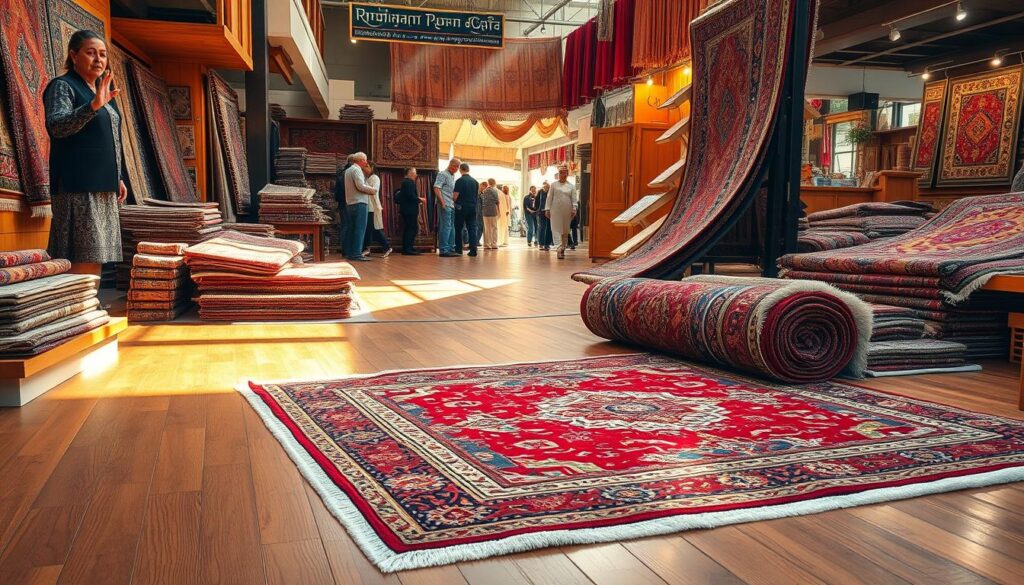
Going to a local store or meeting an artisan lets you feel the rug’s texture and see its quality. You can also see how the colors look in natural light, which is hard to do online. Talking to a local expert can give you valuable insights about your rug’s history and care.
Shopping locally helps skilled craftspeople who are proud of their work. They can tell you about their rugs and how to take care of them. If you want authentic Persian rugs for sale, a local dealer is a great place to find them.
Auction Houses and Estate Sales
For rare or antique rugs, try auction houses and estate sales. These places have unique items you can’t find elsewhere. Always check the rugs before the auction, as they are sold as-is.
Going to an auction takes patience and knowing your budget. Research the rug’s value before bidding to avoid paying too much. With careful planning, you can find a treasured heirloom through these special sales.
Caring for Your Persian Rug
We believe that proper maintenance is key to making your rug last for generations. These beautiful pieces are more than just floor coverings; they are investments that need care. By following a consistent care routine, you can keep the fibers strong and the colors bright for years.
Maintenance Tips for Longevity
Regular care is the best way to prevent early wear. We suggest vacuuming your rug at least once a week to remove dust and grit. Always use a suction-only vacuum, as beater bars can damage the delicate hand-knotted fibers.
Rotation is also crucial for even wear. We recommend rotating your rug 180 degrees every six months, if it’s in a high-traffic area or gets direct sunlight. Using a high-quality rug pad also helps, as it absorbs impact and prevents slipping.
Cleaning Techniques for Different Fabrics
The cleaning method depends on the rug’s material. Wool rugs are more durable, while silk rugs need gentle care. Avoid harsh chemicals or steam cleaners, as they can damage the natural oils and cause permanent harm.
For deep cleaning, hiring a professional rug cleaner is best. They know how to handle natural dyes and delicate knots without damaging the rug. If you clean a small area yourself, test a tiny, inconspicuous spot first with a mild, pH-neutral soap solution.
Dealing with Stains and Damage
Accidents can happen, but acting fast is crucial to prevent stains. If a spill occurs, blot the area immediately with a clean, white cloth to absorb as much liquid as possible. Never rub the stain, as this can push the spill deeper into the foundation and fray the fibers.
For stubborn stains or structural damage like loose fringe or unraveling edges, seek professional repair services immediately. Early action prevents costly restoration projects later. Below is a summary of how different materials respond to standard care practices.
| Material Type | Vacuuming Frequency | Spill Response | Professional Cleaning |
|---|---|---|---|
| Wool | Weekly | Blot immediately | Every 2-3 years |
| Silk | Bi-weekly (gentle) | Professional only | As needed |
| Cotton/Blend | Weekly | Blot with mild soap | Every 3-5 years |
Rugs as Investment Pieces
Persian rugs often increase in value, just like traditional art. Many buy them for their beauty, but smart collectors see them as stable financial assets. A good Persian rug price guide helps understand the value of different styles before buying.
Understanding Resale Value
The resale value of a rug depends on its condition, age, and where it’s from. Handwoven rugs from famous places often keep or grow in value over time. Some antique rugs have sold for hundreds of thousands at auctions because they’re so rare.
When looking at resale value, we check for natural dyes and high knot density. These show top-notch craftsmanship, unlike mass-made items. A well-kept rug is a tangible asset that can appreciate in value while you enjoy it.
Trends in the Persian Rug Market
Today, the market loves rugs with unique stories and artistic integrity. Collectors want specific patterns that are getting harder to find. Keeping up with these changes is key for anyone using a Persian rug price guide to build a collection.
Mid-century and antique tribal rugs are still in demand. They mix cultural heritage with modern style. Watching auction results helps spot which styles are rising in value globally.
Rarity and Its Impact on Value
Rarity is a big reason why rugs can increase in value over time. When a design or technique goes out of style, the remaining pieces become more valuable. Their historical importance also adds prestige, attracting serious collectors worldwide.
The table below shows what makes a rug a good investment:
| Factor | High Value Indicator | Low Value Indicator |
|---|---|---|
| Age | Antique (100+ years) | Modern/Contemporary |
| Dyes | Natural/Vegetable | Synthetic/Chemical |
| Condition | Excellent/Original | Damaged/Restored |
| Rarity | Unique/Limited | Mass-produced |
Investing in quality rugs takes patience and research. Focus on authenticity and history to make sure your rug is a valuable asset for years.
The Importance of Rug Placement
Proper rug placement is key to a welcoming home. It helps define zones in open-plan spaces. This turns scattered furniture into a cohesive layout.
A rug should anchor your decor. Without thought, even the most stunning rug can feel out of place. Follow some simple guidelines to showcase your rug’s beauty.
Living Room Layouts
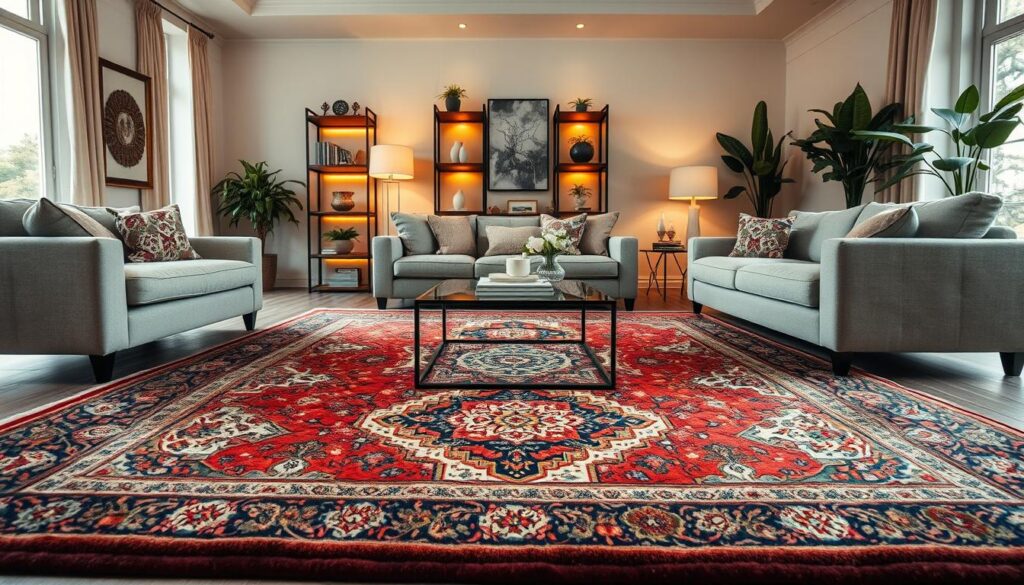
In living rooms, sofas and chairs should have their front legs on the rug. This anchors the seating area and brings unity. It stops furniture from looking like it’s floating.
For bigger spaces, put all furniture legs on the rug. This creates a luxurious feel, perfect for formal areas. Make sure the rug is at least six inches beyond your sofa for a balanced look.
Bedroom Considerations
In bedrooms, aim for a soft landing spot. Place the rug perpendicular to the bed, covering two-thirds of the frame. This way, you step onto a soft surface every morning.
If space is tight, use smaller runners beside the bed. This adds visual warmth without taking up too much space. Symmetry is crucial for a peaceful bedroom.
Dining Area Essentials
Dining rooms need a practical rug placement. The rug should fit the table and chairs, even when pulled out. Aim for at least 24 inches of clearance on all sides.
This space prevents chair legs from getting caught on the rug. It also protects the rug and furniture from damage. A well-placed rug under the table enhances the dining experience.
| Room Type | Placement Strategy | Key Benefit | Recommended Clearance |
|---|---|---|---|
| Living Room | Front legs on rug | Anchors seating | 6-12 inches |
| Bedroom | Two-thirds under bed | Adds comfort | 18-24 inches |
| Dining Room | Full table coverage | Protects floors | 24-30 inches |
| Entryway | Centered in space | Defines entry | 6-8 inches |
Enhancing Your Home with Persian Rugs
Persian rugs are more than just floor coverings; they are transformative tools for interior design. A well-placed rug can immediately enhance the look of a room, even if the space is not yet fully furnished. By choosing the right piece, you provide your home with a sense of history and artistic flair that few other decor items can match.
Creating Focal Points in a Room
One of the most effective ways to use a rug is to establish a clear focal point. When you place a vibrant, intricately patterned rug in the center of a living room, it naturally draws the eye and anchors the surrounding furniture. This technique creates a sense of cohesion and balance in your floor plan.
To maximize this effect, consider these design strategies:
- Ensure the front legs of your sofas and chairs rest on the rug to unify the seating area.
- Select a rug size that defines the space without overwhelming the room’s dimensions.
- Use the rug’s primary colors to dictate the palette for your throw pillows and curtains.
Layering Rugs for Depth
If you want to add visual interest and a touch of luxury, consider the art of layering. Placing a smaller, ornate Persian rug over a larger, neutral-toned jute or sisal rug adds unexpected texture to your floors. This method is useful in large, open-concept rooms where you need to define specific zones.
Layering also provides a practical benefit by adding extra cushioning underfoot. It allows you to experiment with different patterns and styles without committing to a single, large-scale design. Mixing textures creates a sophisticated, curated look that feels both cozy and intentional.
Seasonal Decorating with Rugs
Your home should evolve with the changing seasons, and your rugs can play a vital role in this transition. During the colder months, a thick, wool-based Persian rug adds warmth and comfort to your living space. These pieces act as natural insulators, making your home feel inviting and snug during winter.
When the weather warms up, you might choose to rotate your rugs to lighter, more vibrant options. This simple swap can refresh your interior without the need for a full renovation. By maintaining a small collection of high-quality rugs, you gain the flexibility to adapt your home’s atmosphere to suit your mood and the time of year.
How to Spot Imitation Rugs
When looking for authentic Persian rugs for sale, knowing the difference is key. The market is full of fake rugs that look like the real thing. Learning how to spot them can save you money and ensure you get a real piece of art.
Common Red Flags to Avoid
To check Persian rug quality criteria, look beyond the design. Many fake rugs are made by machines and don’t have the same feel as hand-knotted ones. Always do the “Flip Test” to see if it’s real.
- The Flip Test: Turn the rug over to check the back. You should see clear, distinct knots that match the front. If the back looks uniform or has a glued-on cloth, it’s fake.
- Synthetic Materials: Real rugs use natural materials like wool, silk, or cotton. If the fibers feel like plastic or smell bad, they’re synthetic.
- Fringe Construction: On a handmade rug, the fringe is part of the warp threads. If the fringe is sewn on as a separate piece, it’s an imitation.
Certifications and Authenticity Labels
Buying a handmade Persian rug means checking the seller’s documents. While a certificate is helpful, don’t rely on it alone. A good dealer will give you detailed info about the rug’s origin, materials, and age.
Look for labels that say where it was made and what materials were used. But remember, labels can be fake. Always check the rug’s quality and material yourself.
Importance of Provenance
Provenance is the rug’s history, including who owned it before and where it came from. A rug with a clear history is more valuable and likely real. This history proves its cultural and artistic worth.
“The true value of a hand-knotted rug lies in its story, which is preserved through its provenance and the hands that crafted it.”
Buying a rug with a known history is more than just getting a floor covering. It’s getting a piece of history. Always ask for records or appraisals that show the rug’s journey to your home.
Tips for First-Time Buyers
Buying a hand-knotted piece adds timeless beauty and history to your home. We want you to feel confident as you look for the perfect textile art.
Establishing Your Financial Plan
Setting a realistic budget is the most important step for new collectors. High-quality craftsmanship is available at many price levels. Use a reliable Persian rug price guide to understand market values.
You can find amazing pieces that match your budget without losing quality.
Defining Your Personal Style
Knowing what you like helps you choose from the many patterns and colors out there. Visit the best Persian rug sellers to see different textures and designs. This guide helps you make a smart choice.
Follow these tips to shop with confidence. Your home needs a centerpiece that shows your unique style. We hope you find a beautiful rug that will last for many years.